


10 October 2026
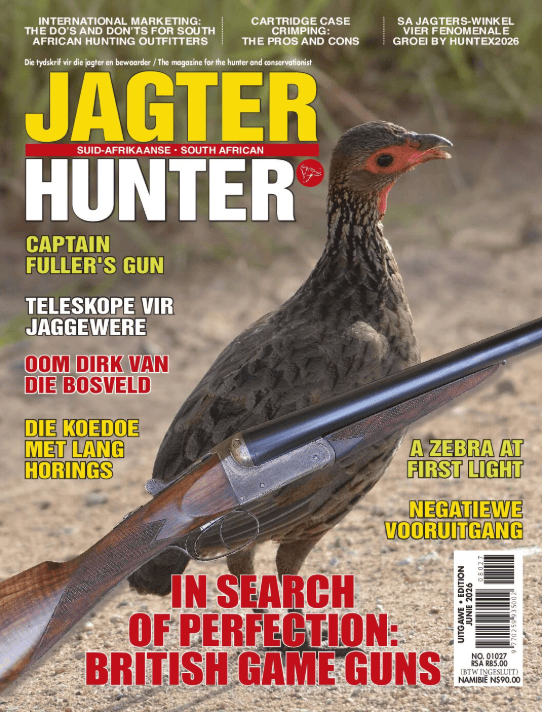
A zebra at first light
There are mornings that stay with you forever – not because of a single moment but because of the way the light, silence, anticipation and purpose come together. This morning in the Eastern Cape was one of those – BY CARLO HILL
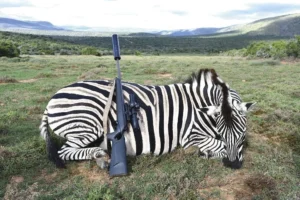
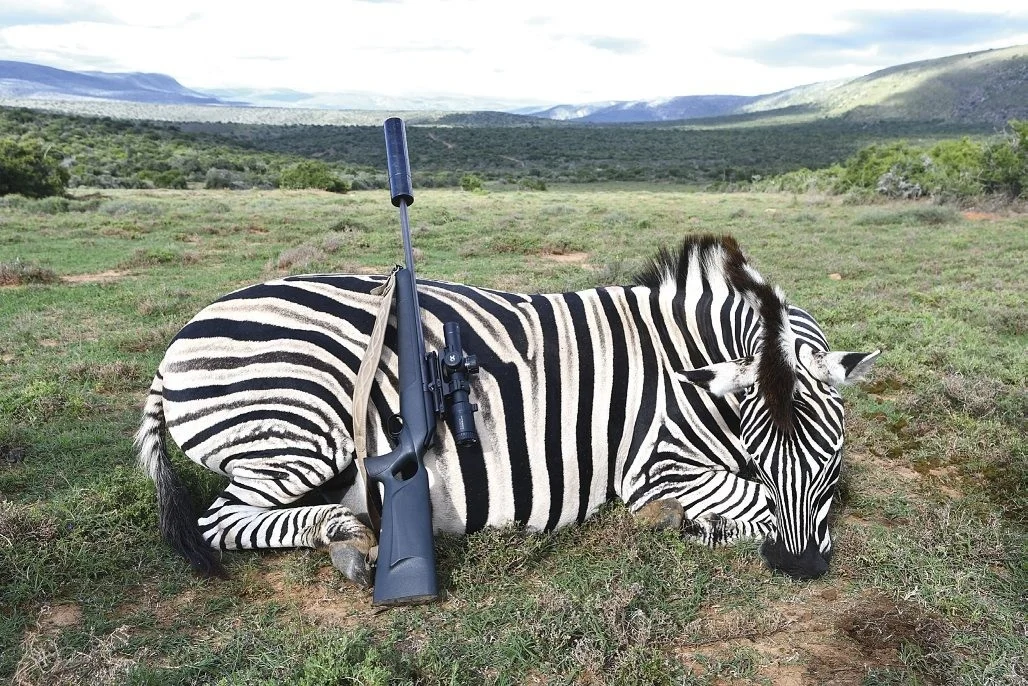
The end result of a successful hunt: a beautiful, hard-won trophy zebra.
Long before the sun touched the hills around Alicedale, the hunting party set off. The air was cool, unexpectedly so for those who associate Africa only with heat. Dew clung to the grass, and from the bush came the first sounds of the day: birds calling, insects stirring, the faint crack of something moving unseen. Africa was waking up.
For the visiting hunter from Germany, this was his very first stalk on African soil. Despite decades of hunting experience in Europe, everything felt different here – more intense, more elemental. This was not about routine but about immersion.
TOUGH QUARRY, ROUGH TERRAIN
The chosen quarry was a zebra. For many South African hunters, this is a familiar plains game species, but for overseas guests, it is one of the true icons of Africa. Alert, tough and intelligent, the zebra is not an “easy starter animal” but a deliberate choice, a species that demands respect.
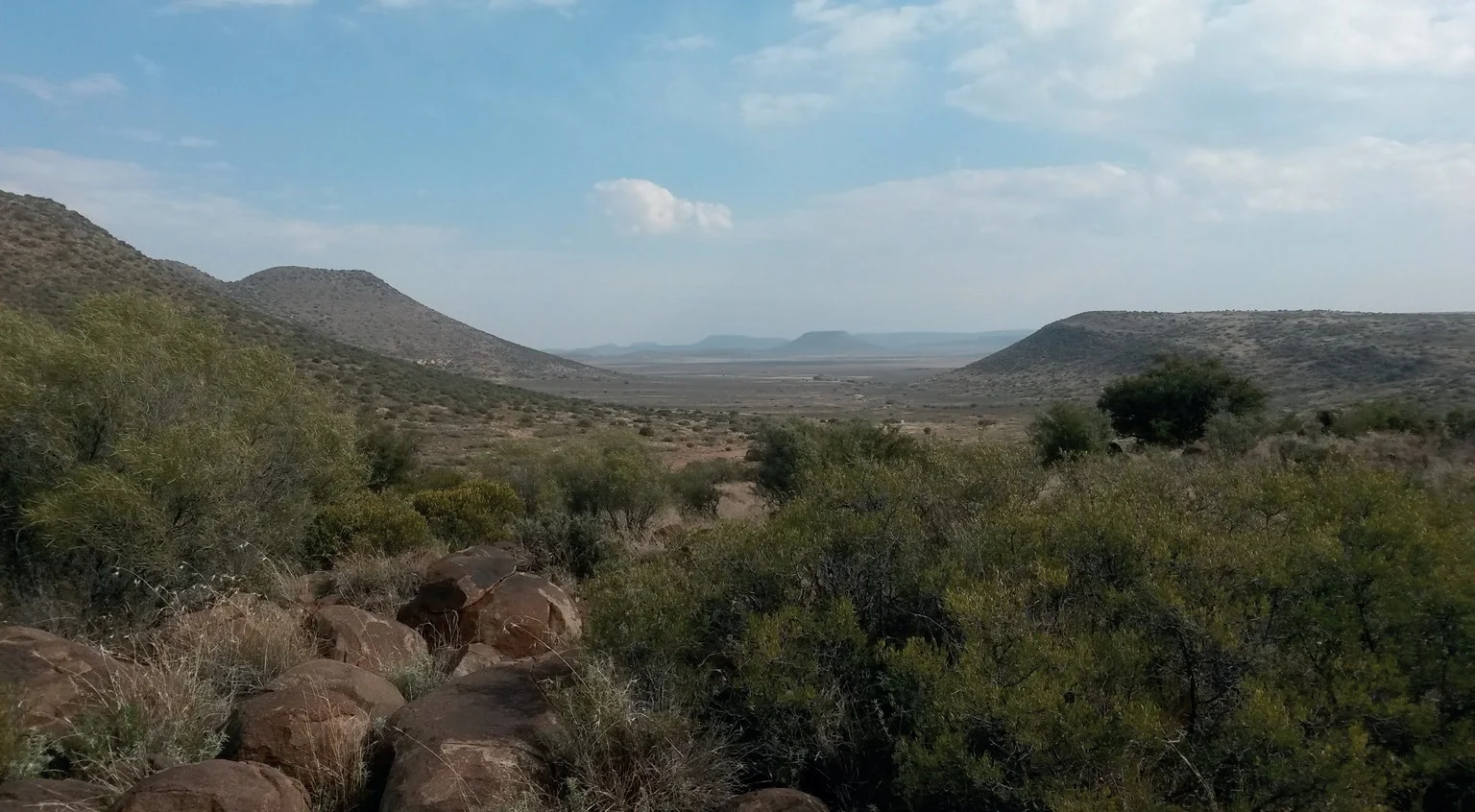
The Ngiri hunting property near Alicedale is a place that offers no shortcuts. This part of the Eastern Cape is rugged and honest: broken valleys, rocky ridgelines, dense bush interspersed with open ground, and natural watercourses that support a wide variety of wildlife. It is terrain that tests both hunter and guide, physically and mentally.
True to South African hunting ethics, the rules were clear: No hunting from the vehicle. No waterhole ambushes. No easy opportunities around the lodge. Every animal taken here must be earned on foot. Wind, terrain and patience matter more than anything else.
The zebras were spotted early, high up on a rocky slope. Standing among loose stone and scrub, they were alert and well positioned. And just as quickly as they were seen, they vanished into the rough terrain – typical zebra. The real hunt began!
The hunting party took a wide loop to approach from downwind. Step by careful step, they moved across rock and brush, stopping often and watching constantly. The professional hunter led calmly and deliberately, reading the ground as only someone deeply familiar with it can. For the visiting hunter, it was a lesson in African stalking at its purest.
As the sun rose higher, the cool morning gave way to warmth. Jackets came off, breathing grew heavier and sweat began to run. Yet again and again, the eye was drawn to the landscape itself – vast, wild, glowing in soft morning colours. This sense of space and freedom is exactly why hunters from around the world return to Africa.
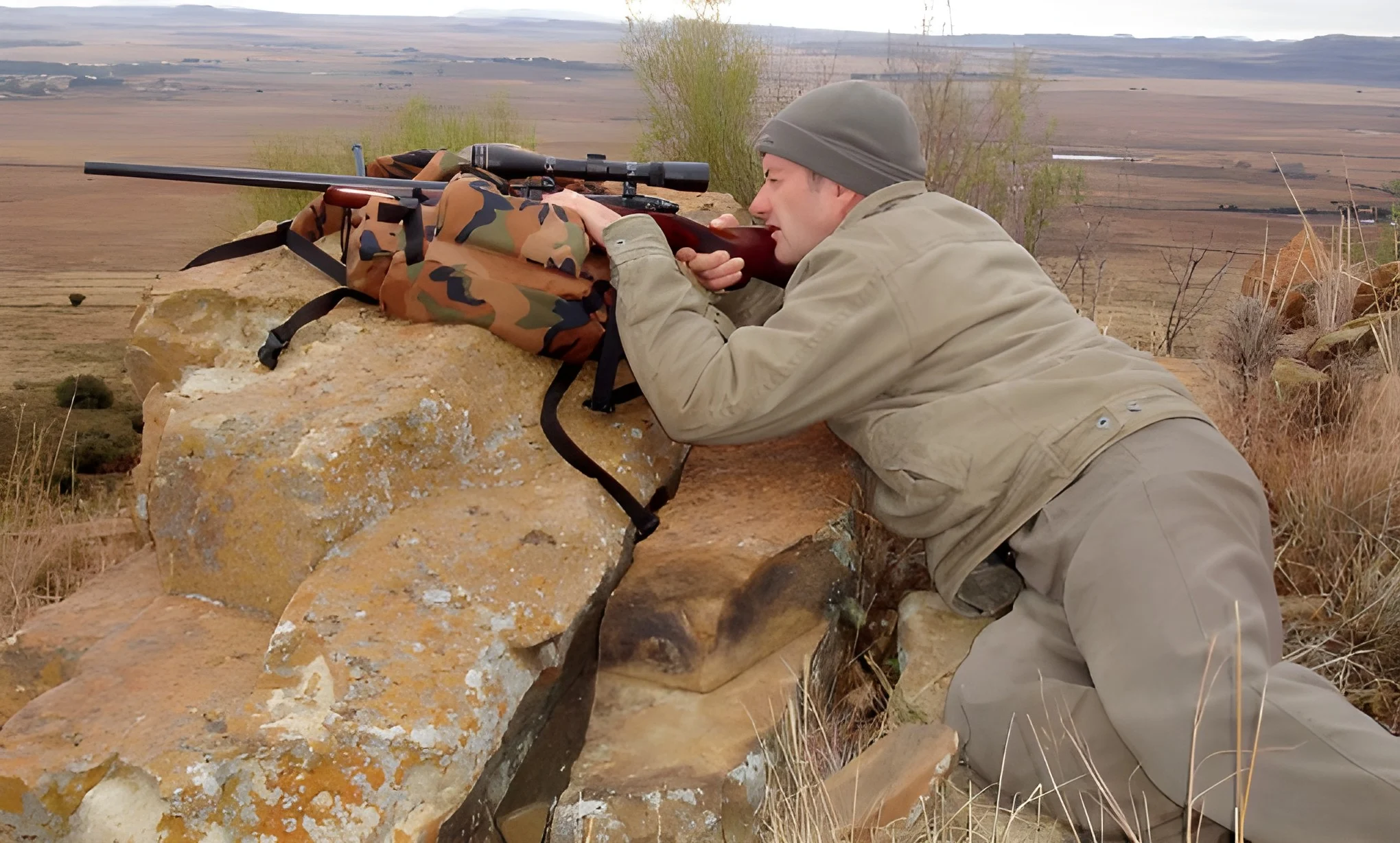
In the hunter’s hands was a Blaser rifle, equipped with an Integrix riflescope, quietly doing its job and providing a clear, calm sight picture in the constantly changing light. The rifle was chambered in 9.3×62 Mauser, a cartridge long trusted across Africa and valued for its authority and reliability in mixed-game areas.
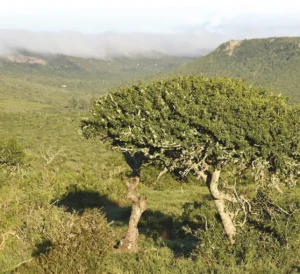
Spectacular Eastern Cape scenery.
EVENTFUL HUNT
After a long traverse along the slope, the zebras came into view again. The small herd stood feeding calmly in the bush. The wind was right, the distance workable. Everything pointed toward a conclusion to the stalk. Then Africa reminded everyone that nothing here is ever predictable. There was movement to the right, and two Cape buffalo bulls stepped out of the thick bush. The massive, dark shapes were less than 200 metres away – the legendary “Black Death.”
The atmosphere changed instantly. Every hunter who has spent time in Africa understands what that moment feels like. The wind remained favourable, but one of the bulls turned his head and studied the group intently. No charge. No retreat. Just calm, deliberate awareness.
Now it was about discipline. The shooting sticks were set up and the chosen zebra was carefully identified. While the visiting hunter focused entirely on his shot, the PH and companions kept a close eye on the buffalo. Time stretched. Silence pressed in. Only breathing, wind and the faint sounds of the bush remained.
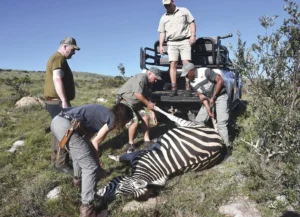
The hunting party loading the quarry onto the back of the vehicle.
Then the shot broke. The report echoed off the hills and rolled through the valleys. The zebra reacted clearly as the bullet struck, and it went down. The buffalo stood, heads high, watching for a moment before turning and melting back into the bush. Only then did the tension release.
The approach to the fallen animal was slow and respectful. For the hunter, the emotions were overwhelming. Despite years of experience, this felt like a first all over again. “I haven’t felt this kind of hunting fever in years,” he said later. “It felt like taking my very first animal.”
That evening, as the sun sank deep red behind the Eastern Cape hills and the bush grew quiet, the day found its natural conclusion around the fire. Zebra meat was prepared and shared, stories were told and the day was replayed in conversation. The flavour of the meat, the crackle of the flames, the sounds of the African night – it all confirmed that this was about far more than a successful shot.
These were days that defined South African hunting at its best: honest, demanding, rooted in respect for the land and the game. Days remembered not for trophies alone, but for the experience itself.
“I will never forget this hunt or this country,” said Sven Reinl at the end of his first African journey. “I should have come much earlier. But one thing is certain – I will return.”
Africa leaves its mark, and those who truly hunt here carry it for life.
(This article was published in the June 2026 edition of SA JAGTER/HUNTER)