



















28 September 2026
Riflescope rings and bases: All you need to know
BY PIERRE VAN DER WALT – Choosing the right rings and bases for a riflescope is about far more than simply getting the scope securely attached to the rifle. The mounting system affects alignment, scope height, durability, flexibility and, ultimately, accuracy. Here’s what hunters and shooters need to know before choosing a system.
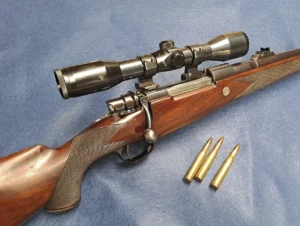
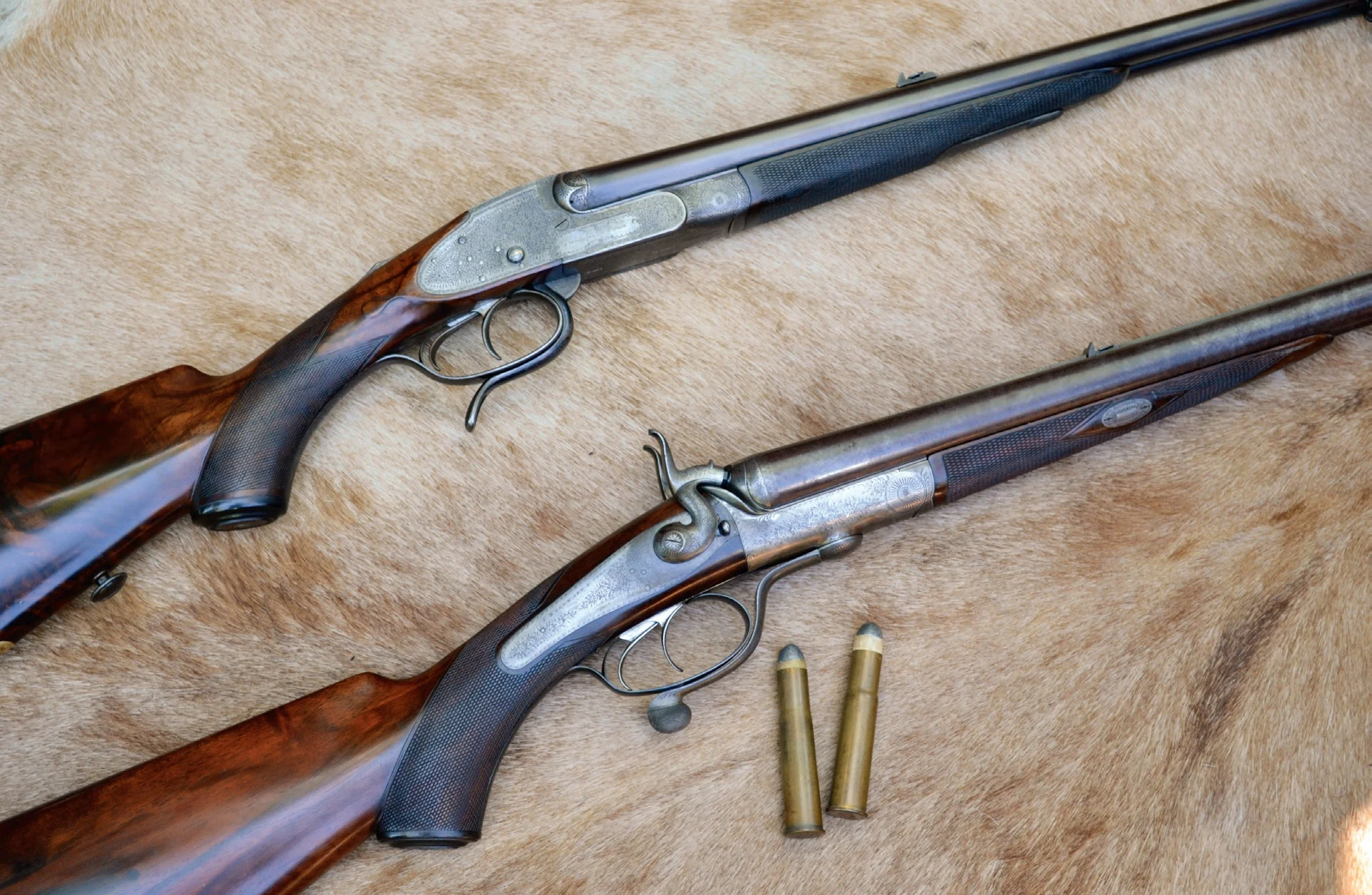
Holland & Holland-style scope mounts are difficult to make and expensive, but very elegant as well! This is an original H&H .30 Super dating from 1978.
BASE OR RAIL CONSIDERATIONS
Let’s start the technical element of this discussion by considering functionality. Not all systems are necessarily suited to all applications. I have the following preferences:
On dangerous-game rifles, I want the loading and ejection port as uncluttered as possible so that I can load cartridges without being obstructed by the scope base and so that the base does not interfere with case ejection. That points to two-piece bases because bridge bases cover part of the action port. I also prefer quick-detach ring systems such as the EAW swing mount, Leupold QR or Warne QD system on such rifles, as these enable one to switch to iron sights in a jiffy.
On plains game rifles, I also prefer two-piece bases, but since the need to switch riflescopes hardly ever materialises on such rifles, the rings need not be quick-detachable. A common argument is that a one-piece base is more rigid than a two-piece one. I am not saying it is a lie, but I invite one and all to submit statistically valid proof that it is indeed the case so that I can change my mind.
For extreme-range competition, a Picatinny rail, inelegant as it is, reigns supreme because it offers virtually unlimited linear ring and scope position flexibility. They can also be had from zero MOA to 20 and more MOA angles to optimise the elevation adjustment range of riflescopes. No other system can compete.
One shortcoming of the Picatinny system, unlike the stud system, is that it offers no lateral adjustment. As a result, scope tubes can be placed under strain if the base is not perfectly machined. In due course, recoil will destroy a riflescope with a strained tube.
The stud system, available from companies such as Lynx and Thor, is strain- or stress-free. The ring cavity is placed over the round base stud. That means the ring can swivel to align itself with the riflescope tube, thereby preventing strain on the tube. The design also allows the rings to be adjusted horizontally on the stud to align the riflescope perfectly with the barrel axis despite small imperfections in the base positioning on the rifle action due to screw-hole tolerances.
Though not a particularly elegant system, it is the most flexible of all. Since many old military actions, such as Mausers, Springfields and Enfields, had been polished and their contours tampered with, the stud system should be considered for these actions.
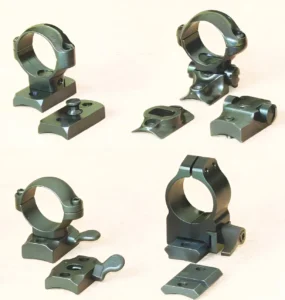
Lynx stud bases and rings on the left, followed by a Redfield-style swing-off quick-release system, Leupold’s QR and Warne’s Maxima vertical split system using the Picatinny slot design on the base.
RING CONSIDERATIONS
I have already touched on rings under the previous heading, but let’s have a quick look at a few other aspects.
Riflescope rings come in several styles. The horizontal-split and vertical-split designs are the most common. In horizontal-split rings, the bottom half of the ring assembly is affixed to the base assembly. To remove or adjust the riflescope, one loosens and removes the top section of the assembly and lifts the scope off the bottom part – convenient and easy.
Vertical-split systems require the dismantling and removal of the entire ring assembly to remove the scope. It is considerably more complicated and complex than horizontal systems. I dislike the protrusion on the top of the ring from both an aesthetic and a functional perspective.
Quick-detach systems require levers to unlock or fasten the rings to the bases. European systems such as the EAW generally have elegant, unobtrusive levers that unlock quite easily, while American ones have bulky levers, which can be difficult to unlock if they have self-tightened under recoil inertia if not positioned horizontally.
Rings come in different heights, the most common of which are the following:
- Low: for 25–44 mm objective lenses
- Medium: for 40–50 mm objective lenses
- High: for 50 mm-plus objective lenses
- Ultra-high: for oversize riflescopes
Generally, the ring heights increase in roughly 5 mm increments. Ring systems such as the EAW can be changed in increments as small as 0,5 mm, but that is only of concern to connoisseur hunters and shooters.
The exact ring height to be selected will be determined by several factors, such as the following:
- Height of base between action and ring
- Barrel contour and diameter
- Barrel shroud and rear-sight interference
So, there is no hard-and-fast height rule that can be applied in this regard.
LAPPING RINGS
Very often, mounting rings have high and low spots or are not perfectly aligned with one another when mounted on a rifle. In such instances, lapping of the rings can improve the grip surface and alignment of the axis of the between-front-and-rear rings as well as that of the riflescope.
Horizontally split rings benefit the most from lapping, but vertically split rings should not be lapped. The two ring sections of vertically split rings touch at the bottom when tightened on the base, but that is not the case at the top. Vertically split ring sections require a little gap in between at the top to permit flexing of the ring section at the top to “throttle” the riflescope tube correctly. The necessary grip is achieved by applying the correct torque to the screws.
Lapping can reduce or eliminate the gap to the point where the rings cannot flex enough to grip the riflescope tube sufficiently. It can also cause the tube gap to go out of round and damage the riflescope tube.
Lapping is recommended on rings that can be adjusted for windage or otherwise adjusted on their bases. If correctly performed, lapping should improve the axial alignment between the scope rings on such systems and reduce linear tension on the scope tube.
Although it is a simple procedure once mastered, and although DIY kits are available, it is a procedure best performed by a competent gunsmith, or at least with the assistance of someone with experience.

Several manufacturers now incorporate modifications of the Picatinny system on their rifles, turning them from indirect to direct mount systems. One of the more elegant executions of this process comes from the rifle manufacturer Merkel.
SYSTEM SCREWS
When it comes to mounting-system screws, I am grateful that the good old days are past. In days gone by, riflescope mounting systems were equipped with normal slotted-head screws. They were an abomination and, since not everybody had access to hollow-ground screwdrivers of the correct width, scope-ring screws were virtually mutilated without exception.
That situation improved marginally when riflescope mounting-system manufacturers switched to hexagonal Allen keys. Because the screws were often made of rather soft alloys and the keys used were often not of the correct size, it still caused problems, resulting in slipping and damage to the screw recesses. It then became very difficult to remove the screws, especially in South Africa where shooters used metric keys on imperial screws.
The best solution to date has been the so-called torque screw. Torque screws work on the same recess-in-screw head and have a Phillips- or star-like key head which requires much more dedication to damage than slot or hexagon screws.
DIRECT SYSTEMS
In direct systems, the rifle action has been shaped to accept rings without an intermediate base system. Such designs include Brno, CZ, Ruger, Sako and Tikka. It is possible to fit bases of various designs to such systems, but it is unattractive and adds unnecessary height to the system. Indirect systems offer more options and versatility.

Several companies offer riflescope mounting kits. The Wheeler kit is affordable, practical and durable.
INDIRECT SYSTEMS
The elegant British and European ring-and-base systems of the past can still be had, but they are rarely used by the generations of hunters who lack an appreciation of style.
Due to space restriction, I will only cover the EAW system. This system not only offers beauty and style but also one-handed, quick-detach capability, return-to-zero reinstallment, strain-free floating of the riflescope tube and horizontal and windage-adjustment flexibility.
The accompanying images show all its features. This kind of system is perfect for custom-quality hunting rifles but is not sufficiently simple and robust to serve on military systems.
The Weaver/Picatinny base with its cross-slot has been with us for almost a century. It was elevated to a new level by Gary Houtsma of the Picatinny Arsenal in the USA. He standardised the slot dimensions, gave it a square-slot profile and added the positional advantage of multiple slots. It is angular and unattractive but very stable, repeatable and exceptionally flexible from a positional perspective.
Its main drawback is the inability to compensate for linear misalignment of the base.
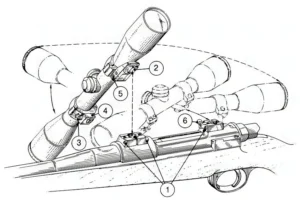
This image illustrates the exceptional ease of operation and speed of installing and removing the EAW system. It is more elaborate than contemporary new-world designs but infinitely more user-friendly.
It has become the go-to system for post-millennial generations of hunters who operate in the American Sniper realm from stationary shooting positions and without the need for rapid magazine reloading and ejection. For those requirements, it is the perfect system. Bases come in two-piece or rail configuration, so despite its ungainly appearance, it can serve on hunting rifles, even for dangerous game.
The stud system is also available in two-piece or rail configuration. It is not nearly as good for return-to-zero as the other two systems mentioned. It is not as positionally flexible as the Picatinny system, and it is not available in quick-detach style because the design does not lend itself to that option. MOA-angled rails for this system are also rare.
In my book, the stud system should be limited to plains game hunting rifles.
(This is a shortened version of the article ‘Riflescope rings and bases’ published in the September – October 2024 edition of SA JAGTER/HUNTER.)