


24 September 2026
On the shoulders of giants: A young man’s perspective on hunting
BY TRISTAN REILLY – There’s a moment etched into the hearts of all true hunters, a moment more powerful than the shot, the trophy or the animal itself. It’s the stillness before it all, the smell of the bush and the steady drum of your heartbeat as you line up not just your gun, but your judgment. That silent pause, heavy with purpose and respect, is the reason I hunt.
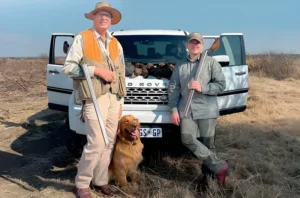
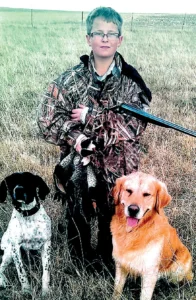
My dad and I with our golden retriever during a francolin hunt.
My name is Tristan Reilly, a 25-year-old avid outdoorsman and budding engineer. The idea for this piece came to mind, beer in hand and cosied up to a crackling fire on a cold night in the lapa of an old farmhouse near Kroonstad, after a long, exhilarating day spent in the grasslands and maize fields.
I found myself sitting around the fire with some of my dad’s cronies: Peter Mills, conservationist and ex-32 Battalion officer; Andrew Tonkin, engineer and vintage gun aficionado; Ren Lubbinge, factory owner, businessman and farmer; my uncle, Pieter Stapelberg, orthodontist; Professor Paul Grobler, geneticist; and a few others. And of course, my old man, Brian Reilly, scientist, academic and cook.
Some were absent: Peter Carr, conservationist and master machinist; Roy Bengis, veterinarian and epidemiologist; Peter Johnson, psychologist; Eric Fisher, pilot; and many more – real men but all mentors to me in one way or another. A few contemporaries, maybe a few years ahead of me, amongst whom I count Lance Tondolo and Ian Carr, both established, young professionals similarly afflicted as myself. And of course, the farmers – our people! Big, strong and hospitable to allow us to walk their land, most often only at the price of good manners and an occasional phone call.
This isn’t a story about rifles or bullet drop. It’s about becoming a man in a world that so often challenges and forgets what it means to be truly connected – to the land, to tradition and to yourself. As you read this, one question echoes through it all: Who is the next generation of outdoorsmen, and are they ready to carry the weight of those who went before?
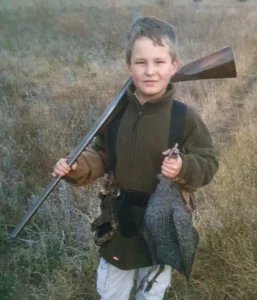
Here I am with my trusty .410 in Kroonstad.
NATURE’S CLASSROOM
From the moment I could walk, the outdoors was a classroom, and my rite of passage had begun. I grew up in a household where being part of nature wasn’t a hobby; it was a way of life. My old man believed that the veld could teach me more than any classroom ever could. And he was right.
Out there, amongst the dust and the thorns, I learned lessons that no book could offer about patience, respect, discipline, knowing when to act and when to wait. The bush didn’t just shape how I saw the world; it shaped the man I became in it.
Some of my earliest and now my fondest memories of being in the veld were following my father’s footsteps and trying to match the stride of a 6-foot man – I could never quite get it right. In those moments, I never really knew what we were after, but I knew it mattered. I didn’t pick it up then, but those early days were shaping my values, my understanding of manhood in a way no classroom could ever teach me. My teacher wasn’t wearing an academic gown standing by a chalkboard; my teacher wore boots, carried a rifle and led by example.
FIRST SHOTGUN
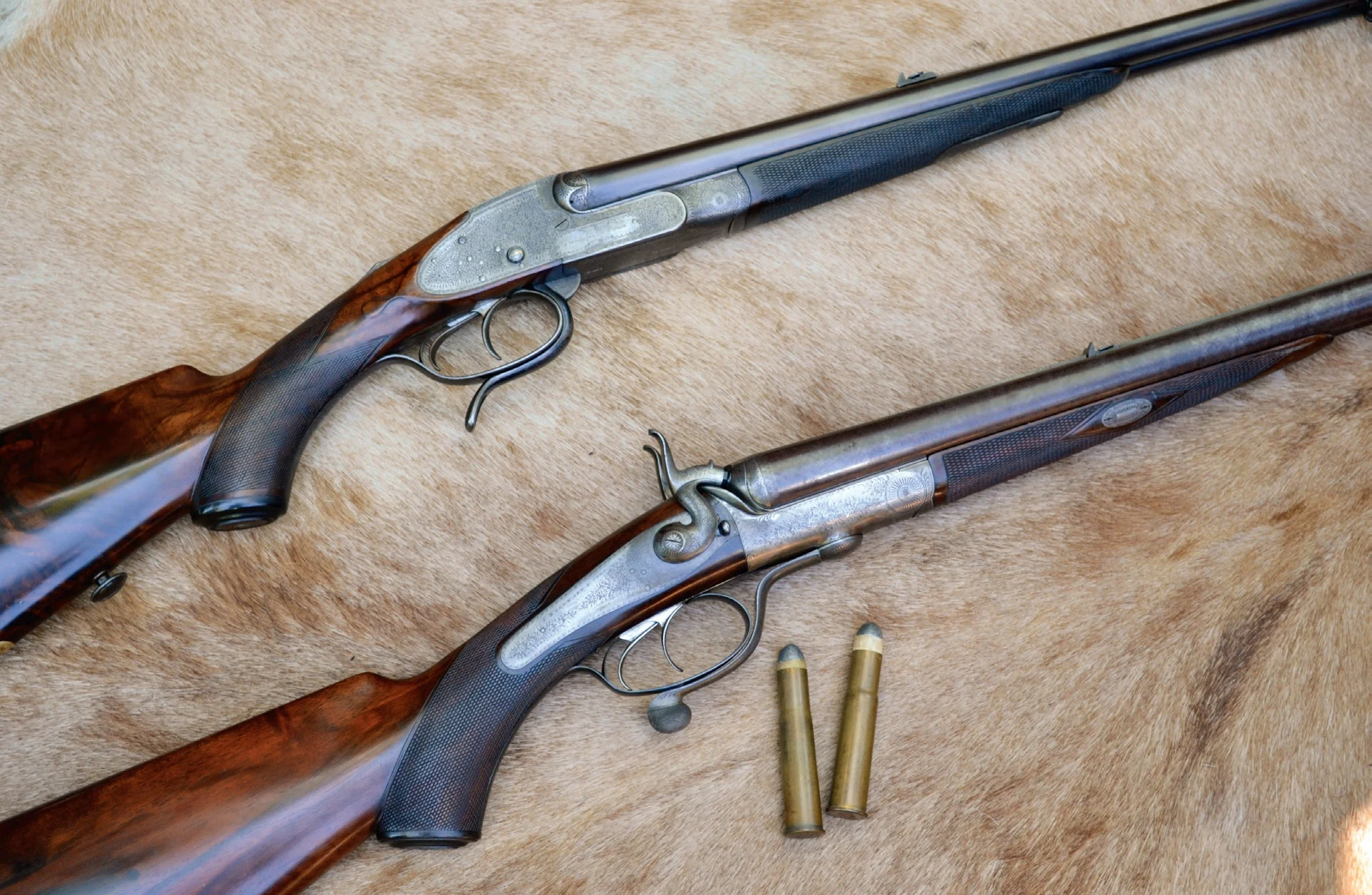
When I was nine years old, my old man bought me my very first shotgun, a side-by-side Jeffery .410. From that moment on, it was the two of us: father and son, with an English pointer and a golden retriever by our side and the veld ahead of us.
I remember one morning in particular, a cold morning in Kroonstad, with the kind of frost that clings to everything. I was standing on the back of the bakkie, wind slicing across my face, my small hands frozen to the cattle rails.
We’d just spotted a flock of guineafowl moving through the lands, and the farmer was dropping us off in a line along the road, each man in position, ready for the walk. Climbing through fences was never my favourite thing. There was something about the icy steel wire, the way it bit into your fingers, or maybe just the fear of it catching skin that stuck in my head. It took a few shaky tries, but eventually, I made it through.
Once the last man had been dropped off about 500 metres from where I stood, the line moved forward slowly and steadily through the grass. My heart began to race, not with fear but with that excitement only the sight of a pointer on point can give you.
Birds started flushing ahead of us. My dad was on my left, Andrew Tonkin on my right. I had the best seat in the house, watching guineas rise and arc overhead, with my old man and Andrew folding them cleanly with crossing doubles like it was second nature.
Looking back, that short walk through frost-laden grass taught me more than I realised at the time: Mind over matter – understanding that discomfort won’t kill you. Persistence – getting through that fence when it would’ve been easier to stay put. Presence – soaking in every sound, every wingbeat, every lesson written in the rhythm of the veld.
From my first little shotgun to the day that I held and fired my dad’s pride and joy – his Watson Bros. 28-bore – the journey has always felt like more than simply learning to handle a firearm.
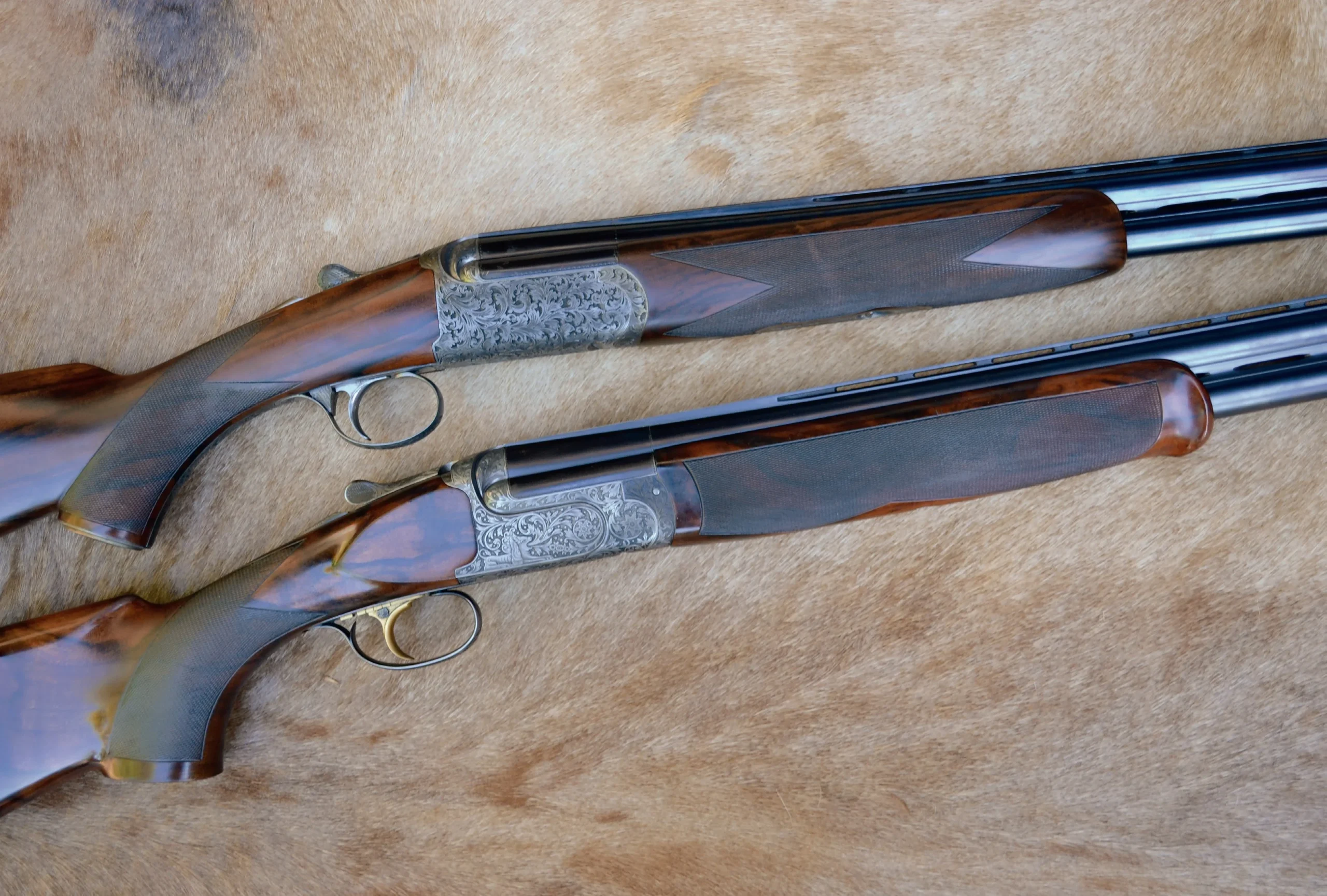
That Watson isn’t just a gun; it’s a magic wand – the blend of English walnut and the dappled Damascus barrels. A piece of craftsmanship so refined, so perfectly balanced, it feels like it was made just for your hands – I’m certainly privileged to know what constitutes a “best” gun. Taking it for a walk is a true privilege – like being entrusted with something sacred.
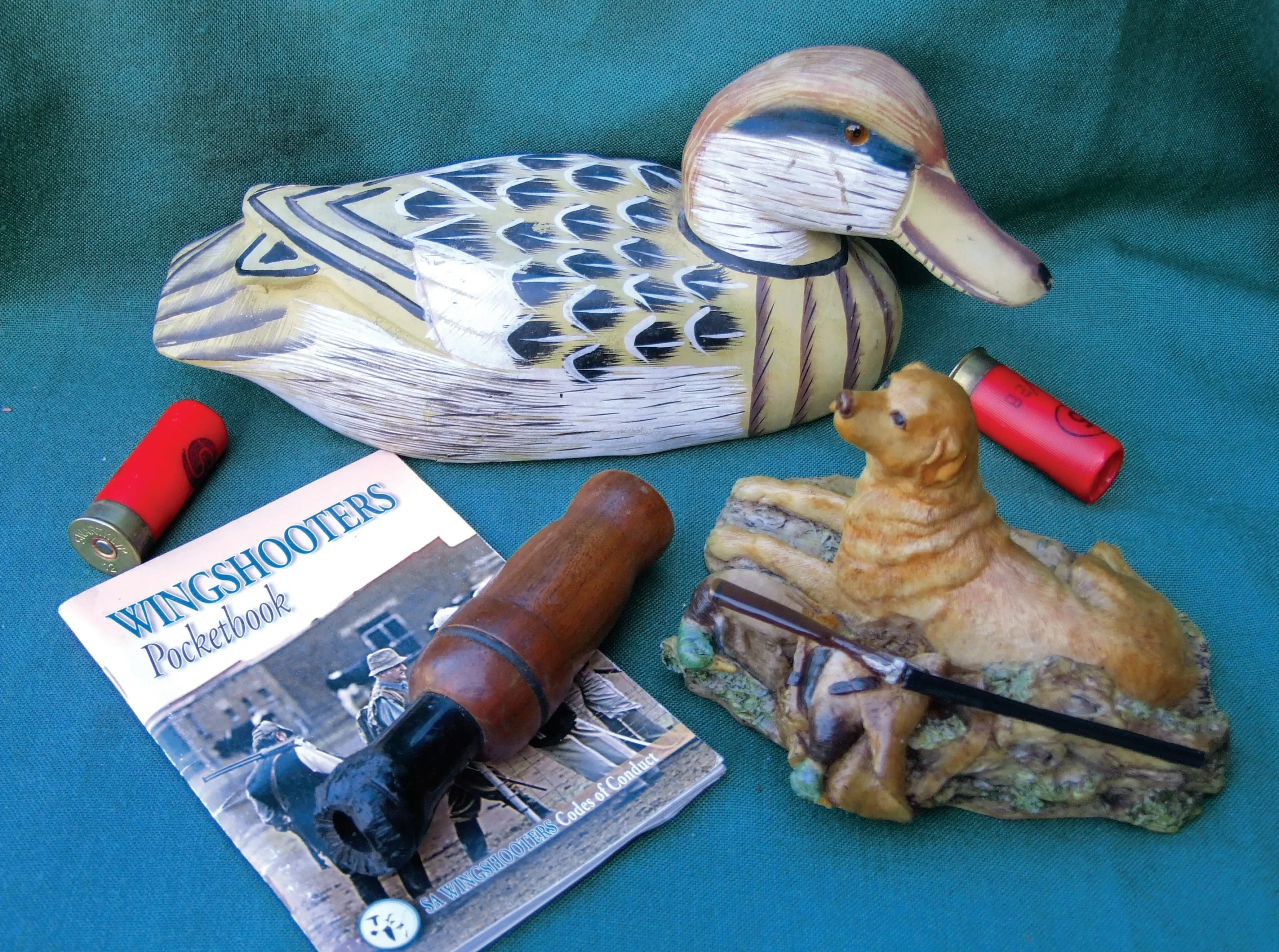
The spoils of a duck shoot near Villiers.
AN UNBREAKABLE BOND
But this story isn’t really about the gun or even the elegant English pointer weaving through the grass beside me – nose low, tail rigid, a creature born to do this. No, this is about the ritualism and our attachment to wilderness. The rhythm and the bonds between a father and his son that are forged neither in arrogance nor in bombast, but in the quiet, shared understanding of early mornings and sunsets.
My dad and I spent countless hours on the Springbok Flats while I was growing up. Miles of dusty ground beneath our boots, crisp air in our lungs, and a kind of peace that’s hard to describe unless you’ve felt it. And it was in those moments that I learned more than any classroom or lecture could ever hope to teach me.
I learned to watch the dog – to really watch – to read its body, its pace, its pauses. I learned to stay ready – not just with the gun, but with my mind.
To trust my instincts. I learned to understand timing, patience and grace. I learned that sometimes, the birds win – and that’s also fine! Because hunting is not about taking; it’s about being there and being present. It’s about being fully present in a world that’s alive and ancient and teaching you – if you’re paying attention.
More than anything, I learned about my dad. Not from what he said, but from how he moved. The way he carried himself. The way he handled his guns with care and purpose. The quiet pride in his eyes when the dog locked up on point, or maybe even the tear in his eye when I did it right.
And I’ve learned from more than just him. I’ve learned from every man I’ve had the privilege to walk the veld with – each one leaving behind a lesson, a gesture, a moment that stays with me long after the dust has settled.
Being outdoors – whether fly fishing on a still Dullstroom morning, wilderness fly fishing for tiger trout or yellow-eyed mullet along New Zealand’s waterways or shooting rising francolin with an English side-by-side – was, in the early days of my journey, very much about spending time with my dad.
I looked forward to those days. I loved the early morning drives and the smell of the veld in the morning. I enjoyed the thrill of the shot, the movement of the dogs and, most of all, I enjoyed being next to him, learning, watching and becoming.
In those moments, it wasn’t about the bird or the cast or even the result. It was about being together, shoulder to shoulder in the wind and dust, in a world that felt far away from the noise and rush of everything else. It was simple, and it was real.
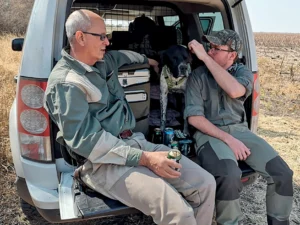
Having a cold one after the guns have been packed away.
INNER JOURNEY
But as I’ve walked this journey further, as I’ve grown older, hunted alone and spent time in the bush without anyone by my side, I’ve come to realise that hunting has slowly become a surrogate for something else entirely. It has become a way for me to spend time with myself.
A time to quiet the noise in my head, to breathe deeply and to tune in to something that feels ancient and grounding. It’s about the silence now; not the absence of sound, but the stillness that you can almost hear.
The kind that settles over you as you stand watching the sun come up. The kind that forces you to be patient, to be present. That silence has a way of stripping away everything that isn’t real. It holds up a mirror to who you are when no one else is watching.
And in that silence, I’ve found more than just shots and sight pictures. I’ve found a deep respect for the land, for life and for myself. Hunting has become less about chasing something out there and more about finding something within – a facilitator to a man’s rite of passage and earning the right to be a man.
Looking back now, I realise how much those small moments built the man I became. They taught me to be tougher than I felt, to do things that scared me, to show up even when it was cold and uncomfortable. There were no shortcuts out there, just effort, patience and the discipline to pay attention.
The bush doesn’t hand out lessons easily, but when it does, they stay with you. I also realise what my dad was trying to achieve by handing me a firearm and having complete trust in his son. He was teaching me responsibility.
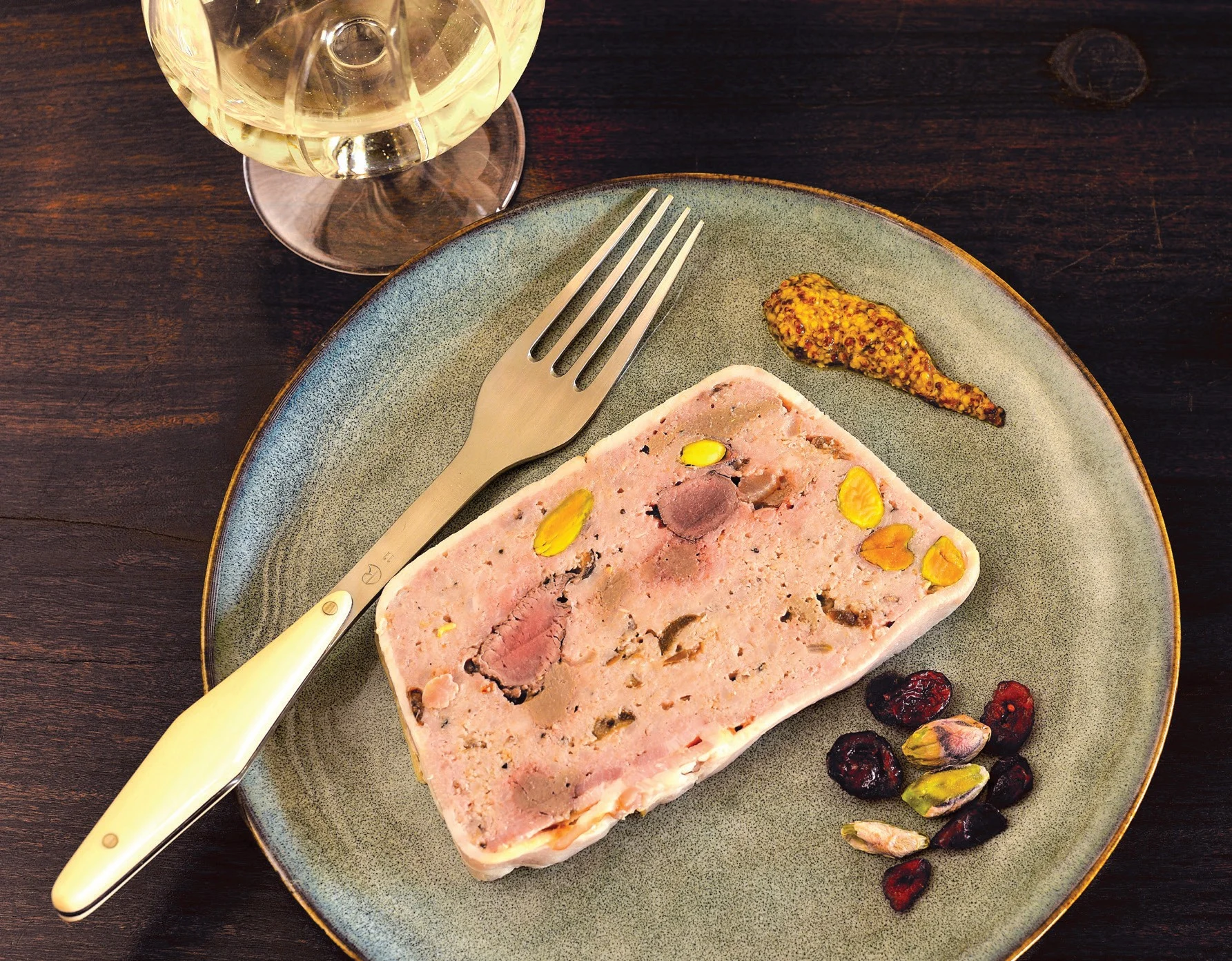
Hunting isn’t just about pulling a trigger or snapping a photo. It’s about legacy, a deep connection to the land, the animal and the generations that came before. It’s about free range, processing and knowing where your food comes from, closing the circle in the kitchen as a mark of respect to the quarry, understanding your role in a living, breathing ecosystem, and carrying forward the simple skills, values and stories passed down over time.
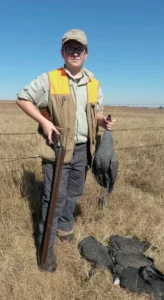
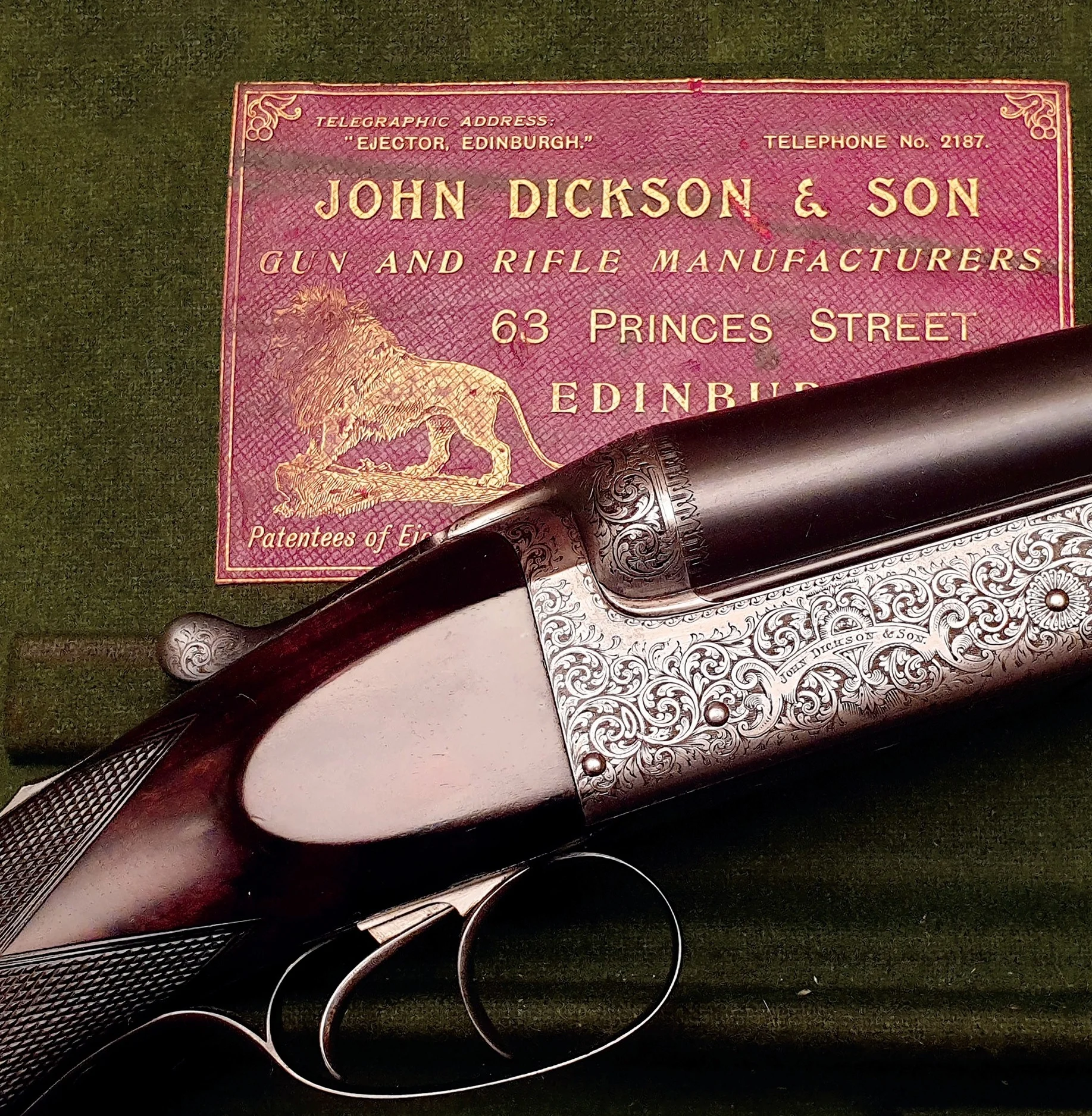
Shooting guineafowl with a classic British side-by-side is a rare treat.
WHO COMES NEXT?
I don’t say this as someone old or nostalgic; I’m only 25. But I know what the veld gave me. I know what it means to be shaped by dust and thorns, by early mornings and long walks beside my father.
The bush raised me. My old man guided me, but the hunt shaped me. And now I find myself looking ahead: Who comes next? Who will teach their sons and their daughters to walk slowly, to pay attention, to respect what they take?
Who will rise before the sun, not for glory but for the stillness? Who will understand that hunting isn’t about ego or trophies but about connection, presence and carrying forward something much older than ourselves?
This isn’t about guarding gates. It’s about keeping the fire lit. The outdoors doesn’t need gatekeepers; it needs stewards. It needs young men and women who are willing to learn the hard way, to get it wrong and try again, to understand the responsibility that comes with stepping into the bush with a rifle.
Because sooner or later, we all become the ones who pass it on. The ones who tell the stories around the fire. And when that time comes, I want to know there’s a next generation standing tall in the long grass – ready, willing and worthy of the task, particularly in a modern world with its urban onslaught on rural lifestyles.
The big-game rite of passage and wilderness fly fishing are topics for another time!
(This article was published in the August edition of SA JAGTER/HUNTER)