
19 October 2026
How to hunt Egyptian geese and spur-winged geese
Decoys, effective concealment and the right equipment are essential for successful goose hunting.
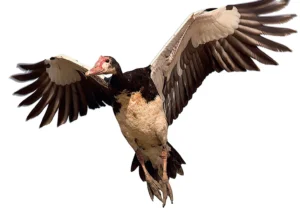
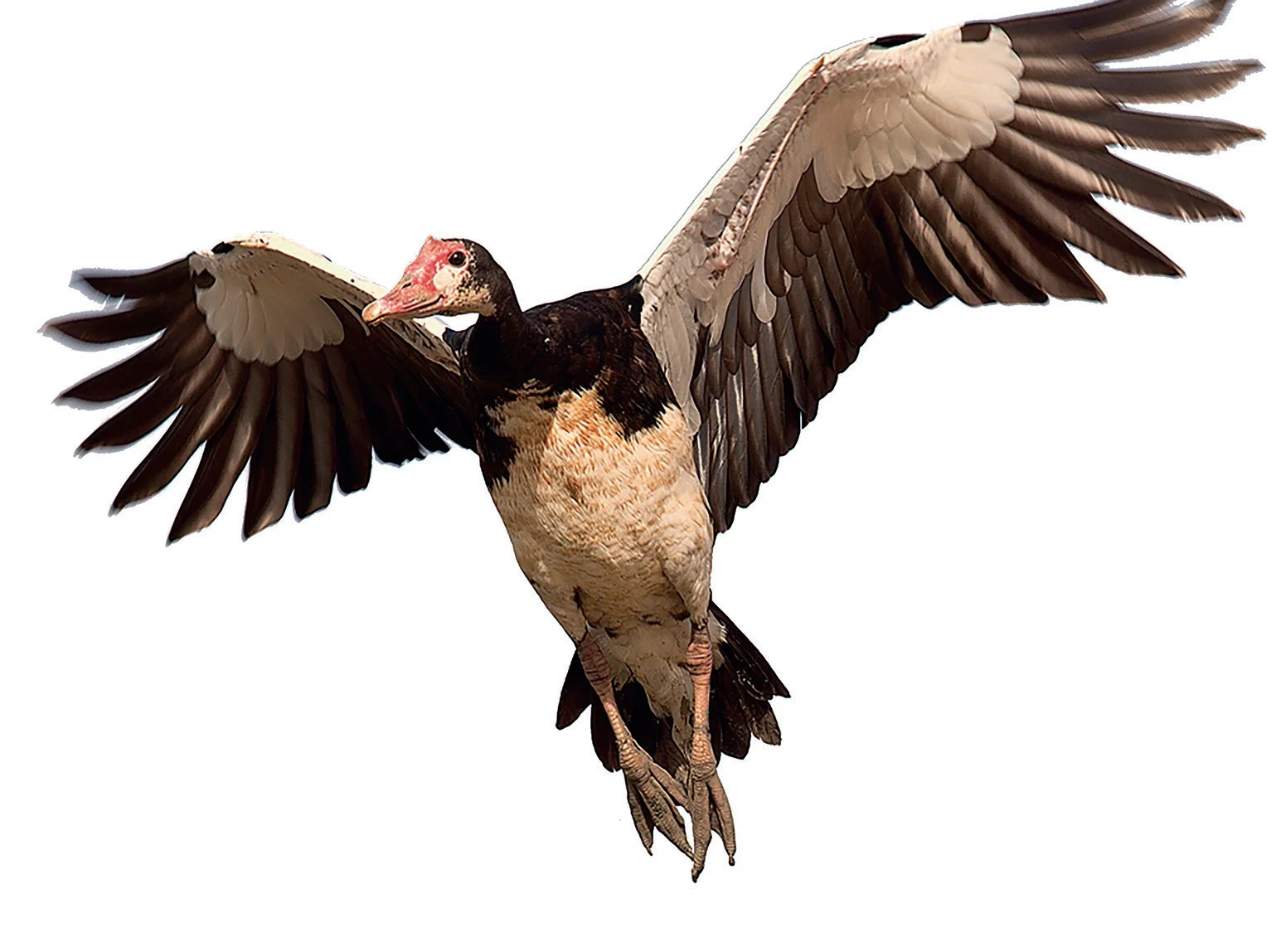
The spur-winged goose is the largest huntable waterfowl species we shoot locally. PHOTO: MICHAEL VILJOEN
Egyptian geese and spur-winged geese are popular quarry for waterfowl hunters in South Africa’s Overberg region. With extensive grain fields, plentiful water and suitable roosting sites, the area provides an ideal habitat for these birds. Their growing numbers can cause considerable damage to newly planted crops.
Successful goose hunting requires patience, careful planning and an understanding of the birds’ behaviour. Here are some practical tips to help you get the most out of a hunt.
- Stay concealed and keep still
Geese have excellent eyesight and are quick to detect anything unusual. Egyptian geese, in particular, can be difficult to fool.
- Wear camouflage that blends into your surroundings. Clothing that works in a harvested maize field may stand out in a different landscape.
- Keep movement to a minimum and ensure that your face and other exposed areas do not give away your position.
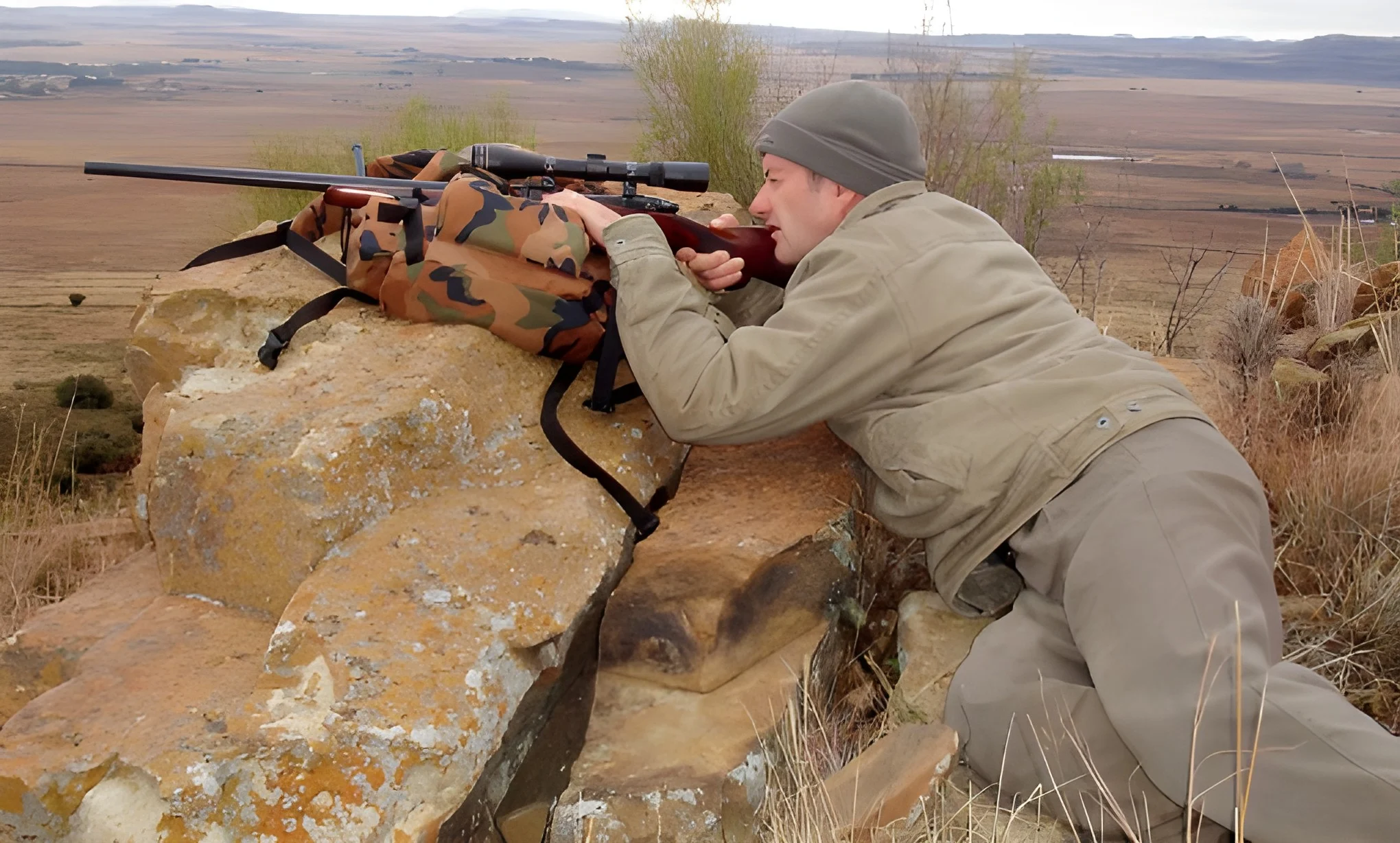
- Choose a hiding place that offers a clear view of approaching birds while keeping you out of sight.
- Make use of natural cover, such as bushes, trees, fence lines, straw bales and vegetation along field edges.
A dog can be useful during a hunt, particularly when retrieving birds from deep water. Its movements may also attract the curiosity of geese, although a dog running between decoys can spoil the setup.
- Hunt at dusk near water
One of the simplest methods is to hide near a farm dam or shallow pan in the late afternoon and wait for the geese to return to the water.
Choose a well-concealed position and have a dog nearby to retrieve birds if necessary. Geese can be difficult to recover from deep water, and wounded birds may defend themselves vigorously with their wings.
ALSO READ: The Glorious Greywing
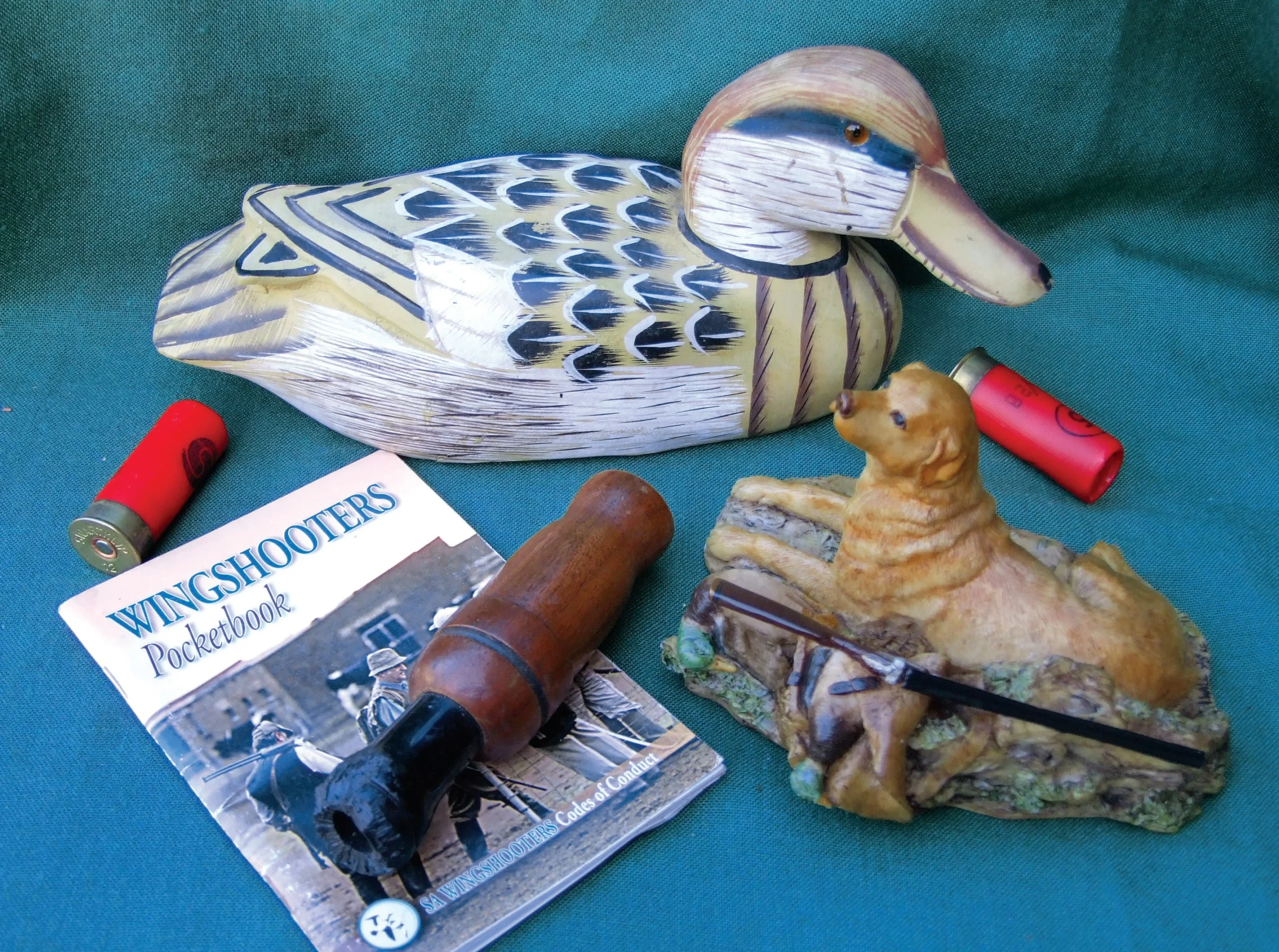
- Use decoys to bring geese within range
Hunting over decoys from a concealed hide is more demanding than waiting beside a dam, but it can be particularly rewarding.
The author makes inexpensive decoys from Masonite hardboard, cutting it into bird silhouettes that are easy to transport in a bag.
Tips for setting up decoys include:
- Make the silhouettes large enough to be visible from a distance.
- Carry as many as you can comfortably manage.
- Arrange them in groups, leaving open spaces where approaching birds can land.
- Position the hide where geese regularly feed or beneath their usual flight paths.
- Use camouflage netting, hessian or suitable natural vegetation to conceal the hide.
The author reports that black silhouettes with red bills and a few white markings have worked for both Egyptian geese and spur-winged geese.
- Choose your shooting position carefully
The aim is to persuade geese to approach within range rather than attempting long-range shots.
The author emphasises that successful goose hunting depends more on concealment, decoy placement and patience than on using heavier shot or longer gun barrels.
In his experience, 35 g loads of No. 4 shot have proved effective when birds are within range. He argues that hunters should focus on getting closer to the birds rather than relying on larger shot sizes to compensate for distance.
- Adapt your approach to the conditions
If time is limited and you know the terrain well, another option is to conceal yourself beneath a flight path and wait for birds to pass within range.
Wind can influence how high or low geese fly, affecting the opportunities available to a hunter.
The author also describes using harvested birds as decoys, propping them up with maize stalks to attract other geese to the area.
Another method he mentions involves lying beneath a piece of hessian covered with grain stubble in a field where geese feed, positioned among a group of decoys.
- Plan how you will carry your birds
Retrieving the birds is an important part of the hunt, particularly when you have walked a long way from your vehicle.
A fully grown spur-winged goose can weigh more than 6 kg. Carrying several birds alongside a shotgun over rough ground can quickly become uncomfortable.
Useful equipment includes:
- A carrying strap: A broad shoulder strap with secure loops can make carrying several birds easier.
- A game bag: Useful when the vehicle is nearby or the distance is manageable.
- A headlamp: Helpful when the hunt or walk back continues after dark.
- A retrieving dog: Particularly valuable when birds fall into deep water.
The author’s own experience illustrates why planning matters. After shooting three large spur-winged geese some distance from his vehicle, he discovered that he had left his carrying strap behind. Using a shoelace as a makeshift strap made the long walk back considerably more difficult.
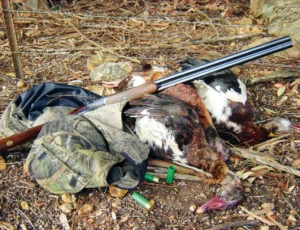
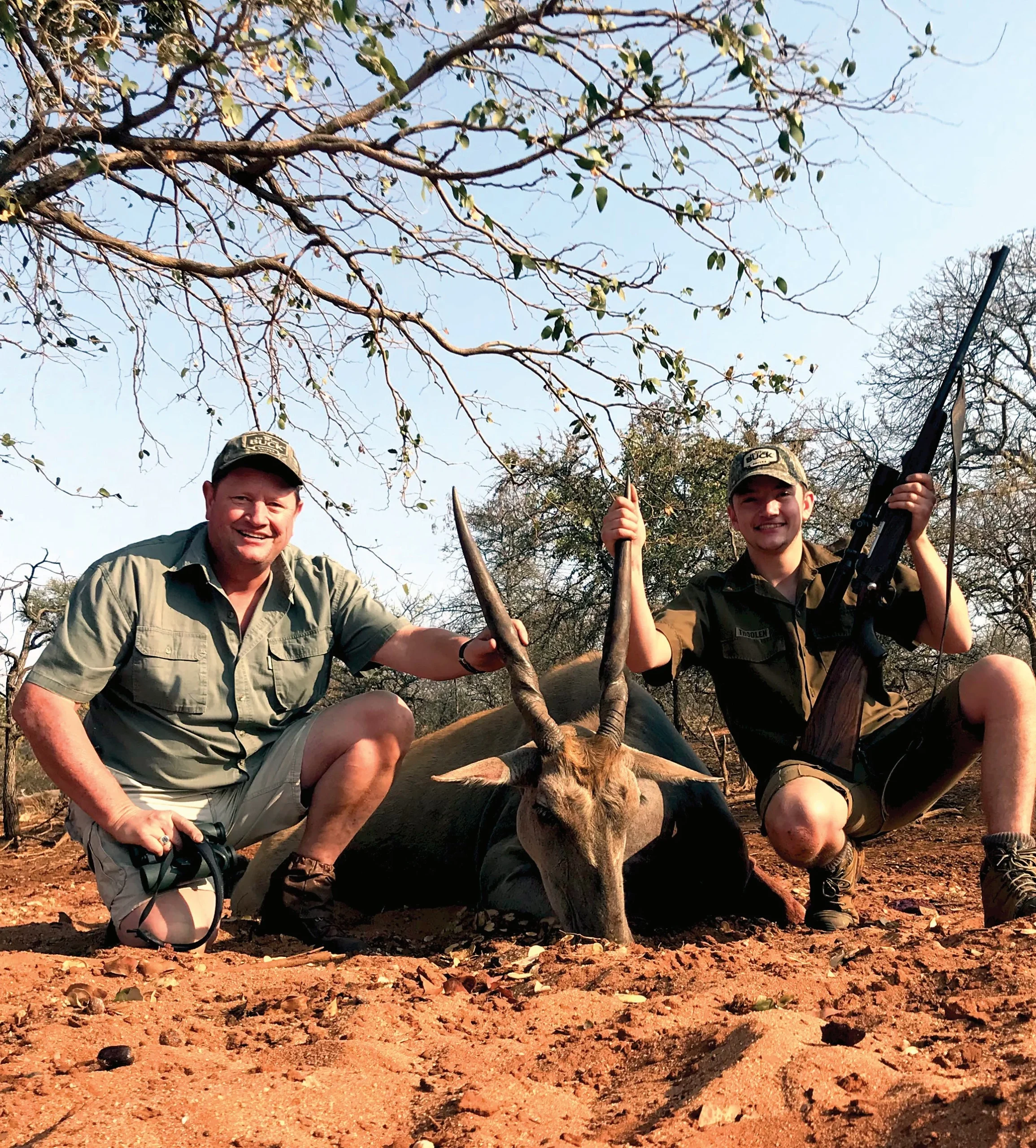
A few more of the big birds that have fallen to Kobus de Kock’s shotgun. With the right ammunition and by avoiding long shots, spur-winged geese are relatively easy to bring down.
PREPARATION MAKES THE DIFFERENCE
Successful goose hunting is about more than shooting. Understanding flight patterns, choosing suitable concealment, arranging decoys effectively and planning how to retrieve and carry the birds all contribute to a more rewarding outing.
Patience, good preparation and the ability to bring birds within range are central to the author’s approach to goose hunting.
(This information was taken from the article ‘So klop jy makoue en ganse’ by Kobus de Kock which appeared in the 2018 edition of KOLSKOOT.)