







9 September 2026
Wingshooting: Is fair chase for the birds?
BY KOBUS DU KOCK – “Fair chase” is a term used by hunters to describe an ethical approach to hunting. The original “fair chase” creed of North America’s oldest wildlife conservation group, the Boone and Crockett Club, defines it as “the ethical, sportsmanlike, and lawful pursuit and taking of any free-ranging, wild animal in a manner that does not give the hunter an unfair advantage”.
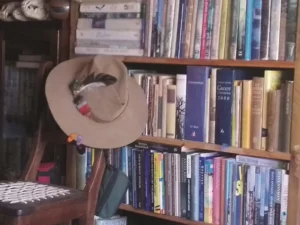
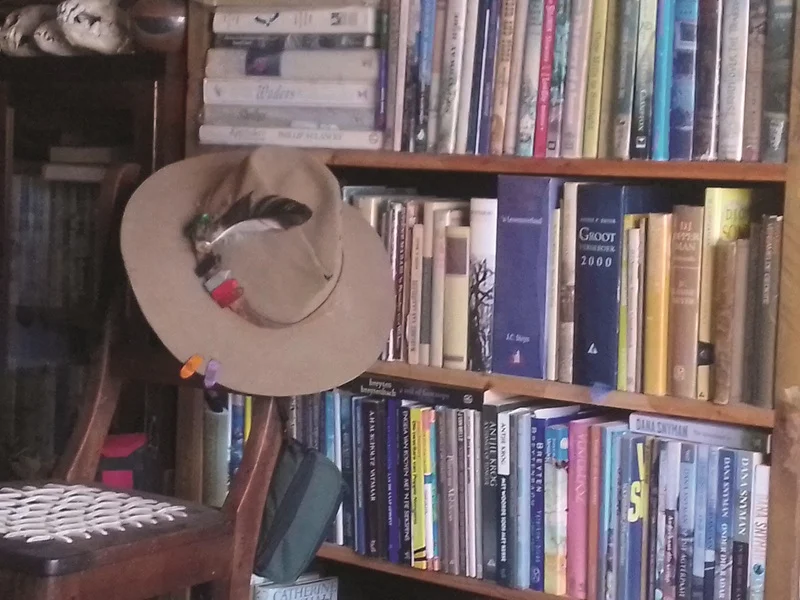
The shepherd’s hat. Forensic analysis detected rabbit fur, various remains of duck and francolin feathers, and traces of sheep dip.
One could possibly extrapolate this philosophy to anything that incorporates obstacles, impediments, difficulties or hindrances in the way of achieving your goal. Like a fellow said to me when I missed my first chance on red-billed spurfowl: the tougher the journey, the greater the prize.
SEA HARVEST
Collecting alikruk*, also known as giant periwinkle, is not a seriously difficult thing to do. Like any sloepsluiper can tell you, wearing a wetsuit, mask and snorkel to harvest your daily lawful quota of five molluscs hardly places your feet on the first rung of the diver’s ladder.
Harvesting alikruk fully donned in diving kit does not qualify you as a diver. You will have trouble getting the back of your hoodie wet. Collecting alikruk has become quite popular now that perlemoen (abalone) is taboo.
On a hike a few weekends ago, a guy told us that collecting alikruk in a Speedo costume constitutes his idea of “fair chase”. I understood immediately what he meant and will fully support that idea in future, but perhaps rather in PT shorts. My days of showing off in a Speedo are long gone. I don’t want to exacerbate the “fair chase” principle by scaring the alikruk away.
Braving the cold (without a wetsuit) is quite a challenge here in our sub-Antarctic waters around the southern tip of the continent.
“There must be places closer by,” said Kevin.
“I don’t know, maybe closer but not better,” was all I could answer. Obviously, there was, but I was too new to the area and, for that matter, to the wingshooting game itself. The problem was that Kevin expected me to know because the local boy should know it all.
He was from the Isle of Jersey, and as a world traveller, had just toured around Australia on his outback sheep-farming motorbike. He showed me the map of his travels, which I now realise must have been a phenomenal achievement, though I had little appreciation for it back then.
CHASING BIRDS
All I wanted to do was shoot a goose. As proof of his world travels, Kevin carried sheep tags clipped to the brim of his sweat-stained felt hat. It was a very smart rabbit fur Akubra, and he wore this “sticky” affair like a medal of honour, never to be taken off, not even at a bank party in the small Free State town of Koppies.
But despite his world traveller status, he knew less about South African game birds than I did, which I must confess, was not much at the time. In fact, I knew nothing, as Barry Emberton so eloquently told me, for it was on his farm just outside town that I eventually found a spot dripping with Egyptian geese and spurwing.
The problem was (and still is) that you don’t just rock up at a farmer you don’t know from a bar of soap and ask him if you can kill some birds on his farm. Yes, I was in agriculture, but citrus farmers seldom have huge flocks of guineafowl scrubbing in their orchards.
I did once, in sheer desperation, try shooting guineas in an orchard. Just getting a clear view and space to swing a gun is difficult enough, especially these days in modern orchards. Perhaps it could still be done in the older plantings, where a tractor could pull a sprayer without touching leaves.
So, when I glimpsed a guineafowl running under the skirt of an old Valencia orange tree, I killed it right there and then, on the ground, not giving it any chance to jinx to freedom over the bankies. It was running at full taps, which could possibly be stretched to the Boone and Crockett concept of “fair chase”.
The farmer was impressed with my snap-shot guineafowl, and my new wife lovingly cooked the bird. But it did not impress my personal concept of “fair chase” as I understood it back then. Birds must fly and Valencia orchards are definitely not the way to go.
There had to be, like Kevin said, better places – like Koppies, as a friend told me. His brother worked in the local bank there and the peanut farmers around the Renoster River had an abundance of birds feeding on the spilt nuts. Guineafowl, Swainson’s francolin, all sorts of ducks and the geese I was so desperately looking for.
It was a simple matter of getting the right company to share the madness of my chase, the long road and the costs.
Limited private mileage on my company car did not allow for goose-shooting excursions to Koppies. This was a small problem for me in those days and just part of the “fair chase” concept of every shoot.
But as the saying goes, “’n Boer maak ’n plan.” Kevin had a farm bakkie and his uncle/boss said we could use it if we wanted to take the chance.
It was no problem. We were fearless back then. After all, it was a Toyota Hilux, so what could go wrong? The fact that it had done well over half a million kilometres and was just about falling apart was not important. It was barely run in, I reasoned, and we could stop the rattles by picking up a few hitchhikers to weigh down the back.
Which is exactly what we did when spotting two youngsters near Volksrust.
They only wanted a short lift to a nearby junction where they would split off to the north. They had heard of jobs being available in Heidelberg, they told us. Very pleasant young guys, we thought, until we discovered later that evening that they had greatly added to our fair-chase problems by lifting all our snacks for the weekend.
They very kindly left us our ammo. Thank heavens the guns were with us in the cab behind the front seats!
Petrol was still cheap back then. I recall filling my car one morning, wondering what the heck we would do when the price hit R1 per litre. And now we cough up over R20, and the price is still climbing rapidly. I don’t think Koppies would have been on our itinerary at the current fuel prices.
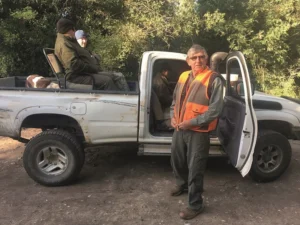
Simon with his beloved Hilux bakkie, like the one that took us to Koppies. Simon sold the bakkie when he left the farm. It was then well into the 800 000 kilometres.
Somewhere to the east of Koppies, we decided to take what looked like a shortcut on our frazzled Shell road map (we must have been aware of the gas-guzzling monster powering the Hilux).
We promptly got lost in some terribly miserable-looking country – flat, featureless and dusty. GPS equipment was non-existent then and we ended up asking dozens of snotty-nosed Free State children, “Is dit die pad na Koppies?”
Totally bewildered, they looked up with big eyes and hit the road, running like hell. Later, it changed to, “Dammit, man, praat tog net! Waar’s Koppies?!”
Kevin was lucky, as they did not understand him at all. All that “fair chase” pressure of finding Koppies now rested squarely on my shoulders.
By the time we eventually rolled into Koppies, we had run out of beers and discovered we had nothing to snack on. It was getting late and we were worried about meeting our hosts – especially when we discovered they were at a full-blast bank party.
Kevin’s sheep-tagged felt hat and my PT shorts hardly matched their smart safari suits. The manager even wore a black pinstripe suit and tie. But the Vrystaters welcomed us like prodigal sons.
Our “fair chase” hunger was soon stilled as the chops rolled off the braai. Even the Aussie sheep farmer had to admit it was good. So good that he did not mind all the “fair chase” handshaking going on.
After his sixth chop, the Engelsman was a converted Vrystater in dripping loin-chop fat, and I was relegated to the mere interpreter. As little Afrikaans as Kevin knew, the Free Staters knew even less English. I remember the manager bravely tried, but to no avail. Kevin stuck to shaking hands.
When we finally got to the field the next morning, I was still dressed in my PT party pants, which gave new meaning to the term “fair chase”.
Waiting for incoming geese at sunrise in the dead of a Free State winter was a serious challenge. Good prep if I ever wanted to go to Antarctica. That’s why I immediately grasped the concept of taking out alikruk in a Speedo.
I shot my first goose and my first Swainson’s on that memorable Koppies trip. But it was also on that same trip that a Jack Russell added the final touches to the development of my “fair chase” theory.
We were cleaning our day’s haul of guineafowl in the back garden of Koppies’ bank manager when his Jack Russell did it… The bastard peed against my leg!
I can only hypothesise that it was the pong of the guineafowl’s guts that urged him to mark the spot. It was the first dog that ever mistook my leg for a tree.
Later years in Pongola, a Dalmatian did it too. I have decided I don’t like Jack Russells and Dalmatians.
That sort of thing, I can assure you, severely escalates the concept of “fair chase”. These days, I have a very good look around whenever I gut birds.
Yip, it’s tough being a wingshooter!
*The HAT dictionary also lists “alikreukel, alikruikel, arikreukel, arikruikel” but we simply call it “alikruk” – Turbo sarmaticus.