







1 September 2026
International marketing: The do’s and don’ts for outfitters
One of the biggest challenges in any industry is marketing, and the international hunting industry is no exception. It does not matter how long your kudu’s horns are, how well-equipped your Land Cruiser is or how luxurious your hunting lodge is – without clients, your safari business will not generate an income.
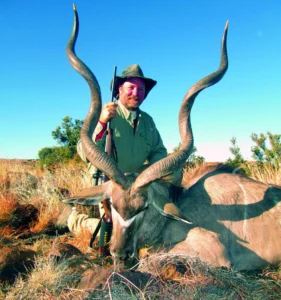
An American hunter, a good friend of Thinus Steyn, with an excellent Free State kudu bull. While this bull measures well over 50″, it is about as large as you can realistically expect in this area. Be honest about the trophy quality of animals in your hunting area. FOTO: THINUS STEYN
South Africa’s hunting industry is highly competitive. While marketing to local hunters is relatively straightforward if you offer a good product at a competitive price, attracting international clients is considerably more challenging.
Put yourself in the shoes of an American or European hunter planning an African safari. You are scrolling through Facebook and other platforms, looking at dozens of outfitters. You may already know that not every outfitter has a spotless reputation, and you may have concerns about safety, South African laws and customs, and what to expect in a foreign country.
The question is: How do you convince that hunter to choose you – and then give him an experience good enough that he recommends you to his friends?
DECIDE ON THE PRODUCT YOU ARE MARKETING
Your hunting operation should determine your target market and marketing strategy.
An outfitter with an extensive, unfenced Big Five concession in Botswana, the Caprivi, Mozambique or Tanzania will naturally target wealthy hunters interested in dangerous game and other prestigious species. An outfitter operating on a farm in the Karoo or Limpopo will have a very different market.
There are many opportunities beyond Big Five hunting, including:
- Walk-and-stalk plains game hunting
- Bowhunting from blinds
- Wingshooting
- Traditional driven springbok hunts
- Varmint hunting
- Culling operations
You can also combine different experiences, such as adding a day of wingshooting to a plains game safari. The important thing is to market what you actually offer, rather than trying to be everything to everyone.
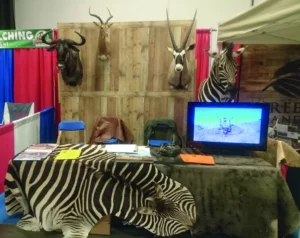
A marketing booth at a smaller regional show in the USA. Over the past 10 years, we have done exceptionally well at this venue thanks to a good client base and diligent marketing in this area. Having local clients in your booth is a great help when marketing in a foreign country. FOTO: THINUS STEYN
CHOOSE YOUR MARKETING REGION
There are hunters all over the world, but it makes sense to concentrate your efforts on countries where there is a strong demand for African hunting.
Language can be a major advantage. If you speak Spanish, German, French or Hungarian, for example, use that ability to target hunters in those regions. Your hunting methods should also influence where you market.
The USA, with its strong bowhunting and handgun-hunting culture, may be a better market for those types of safaris, while European countries may be more appropriate for traditional driven hunts.
The nature of your hunting property matters too. Hunters from countries such as the USA, Canada and Australia often prefer large hunting areas where they do not encounter high fences repeatedly. This may be less important for blind-based bowhunting but can become an issue during walk-and-stalk hunts on smaller properties.
Remember that the quality of the safari is not determined only by the hunting or the size of the bag. Good meals, comfortable accommodation and enjoyable evenings around camp all contribute to the experience. Communicate with clients beforehand about dietary preferences and special requirements.
BE HONEST WITH YOUR CLIENTS
If you are looking to make a quick buck, international hunting is not the business for you. Successful outfitters build their businesses through hard work, honesty and long-term relationships.
Your marketing material must accurately reflect what you offer. If your business is based on kudu and springbok hunting in the Karoo, with accommodation in a restored farmhouse, do not use photographs of elephants and luxury lodges downloaded from the internet. Show potential clients your own facilities, environment and animals.
Be equally honest about how the hunt works. If you hunt across several properties and spend significant time travelling between them, tell clients. If hunting is conducted from a vehicle, make that clear. Likewise, if your hunts involve long walks in difficult terrain, ensure clients are physically capable of doing so before they book.
Do not promise a 60-inch kudu if you know the animals in your area are unlikely to reach that size.
And be upfront about costs. Any additional charges, such as airport transfers, should be clearly stated. Few things damage an otherwise successful safari as quickly as unexpected costs when the final bill arrives.
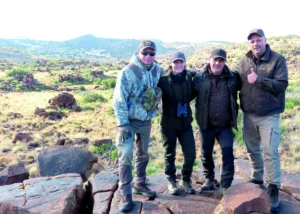
A group of happy Hungarian hunters. Satisfied clients are an investment that should be taken good care of. Word-of-mouth marketing is the ultimate way to sell hunts. PHOTO: THINUS STEYN
COMMUNICATION: BE AVAILABLE AND MAINTAIN CONTACT
An outfitter’s responsibilities do not end when the client boards the plane home. Emails and phone calls continue throughout the year, and questions that seem trivial to an outfitter may be extremely important to a prospective client deciding whether to book. Respond promptly, return missed calls and remember international time differences.
Trophy care is another important part of the service. Be prepared to assist clients with taxidermists and other arrangements where necessary.
A professional, easy-to-navigate website is essential. It gives potential clients an opportunity to learn about your business and allows you to advertise special offers. If web design is not your strength, consider using a professional.
Social media can also help maintain relationships. Post photographs not only of successful hunts but also of wildlife and interesting events on your property. Staying visible helps ensure that clients do not forget about you.
MARKETING METHODS
Agents
Using an agent can simplify marketing, but it has drawbacks. Agents generally represent several outfitters and may naturally promote the hunts that earn them the most money. They may also not understand your operation as well as you do, which can result in clients arriving with unrealistic expectations.
If you use an agent, make sure you agree clearly on what you offer and the terms and conditions of your hunts.
Hunting and outdoor shows
Shows remain one of the best ways to meet prospective international clients face-to-face. Many hunters, particularly first-time safari clients, prefer personal interaction to dealing solely with an agent or communicating online.
The challenge is choosing the right show. Large international events may be ideal for outfitters offering dangerous game in vast, unfenced concessions, but smaller regional shows can be a better fit for outfitters offering plains game or buffalo hunts on South African properties.
Consider attending shows in areas where you already have clients, and invite satisfied clients to help at your stand. Few marketing tools are more convincing than someone with first-hand experience who can recommend your operation.
Do not expect immediate results. It may take several years of attending a show before the investment starts paying off.
Other methods
Meet-and-greet gatherings at existing clients’ homes can be an effective and relatively inexpensive way to reach new hunters. Provide food and drinks, show photographs and videos, and allow existing clients to share their experiences.
Donating hunts to hunting organisations and clubs can also introduce new hunters to your property, although it should not be viewed primarily as a money-making exercise.
Marketing is a long-term project. Be patient and concentrate on what you do well.
International hunting is ultimately a people-focused business. Your ability to work with people is just as important as your hunting skills. Satisfied clients who recommend you to friends, family and acquaintances are invaluable.
Be honest, deliver what you promise, treat your clients well – and give them a reason to come back.
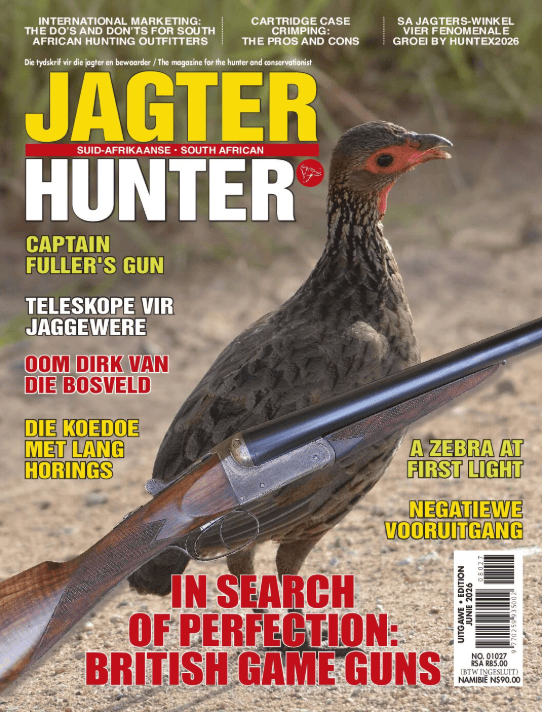
(This is a summary of the article ‘INTERNATIONAL MARKETING: The do’s and don’ts for South African Hunting Outfitters’ by Thinus Steyn, SA Jagter/Hunter, June 2026)