










9 June 2026
Trophy Hunting in Africa: The Facts
By JOHAN VAN WYK
Intro: Sorting the wheat from the chaff as far as trophy hunting is concerned.
Trophy hunting has, of late, come in for a lot of criticism from various animal rights organisations and other groupings opposed to hunting. The criticisms most often levelled against trophy hunting are that it is a cruel pastime, it is unnecessary, morally indefensible and has no place in a civil society. In one instance, trophy hunters have even been likened to serial killers, so the gloves are certainly off where the antis are concerned. Most anti-hunting groups are also very well-funded, and they usually have the support of a number of celebrities as well. It is therefore no surprise that they have no trouble in preaching their disinformation very successfully to a very wide audience.
The skull of a black rhino poached in Zimbabwe some years ago. Well regulated and management is, contrary to what the animal rights movement might claim, an excellent deterrent to poaching in Africa.
A CLOSE LOOK AT TROPHY HUNTING
As someone who has lived in Africa all my life and has been a keen hunter since the age of seven, I have had ample opportunity to witness the real effect of trophy hunting. Notwithstanding the most passionate arguments against it, it is necessary to take a long, hard look at the real benefits that are derived from trophy hunting. To do so it is also just as necessary to ignore the dozens of emotional arguments often forwarded on the subject.
Ethical, sustainable trophy hunting is one of the most important tools for the conservationist. It is a given fact that any area that is fenced off – ev
en an area as big as the almost 20 000km² Kruger National Park – must be managed effectively in order to preserve the habitat so that the wildlife can survive.
“Management” in this instance refers to controlling the animal numbers inside the fenced area in order not to exceed carrying capacity. Trophy hunting at its very heart has the aim of targeting old male animals that are no longer of breeding age and has therefore already contributed their genetics for the greater good of their species. A prime example of this is elephant hunting, a topic that frequently causes tempers to flare and blood pressure to rise. The fact is that the average trophy elephant bull is at least 45 years old, he is no longer breeding and generally prefers his own company to that of younger animals, especially cows and calves.
The removal of such an old, non-breeding elephant bull by means of a legal, ethical hunt has a lot of positives going for it. Firstly, there is an overpopulation of elephants throughout much of their range, a fact that is often conveniently ignored by the anti-hunting fraternity. Elephant bulls can be particularly destructive as they consume vast quantities of food daily and are strong enough to push over even large trees. Therefore, the annual removal of a few select bulls has a positive effect on the environment. Secondly, any elephant hunt generates a lot of revenue, and not only for the professional hunter or outfitter conducting the hunt. The typical trophy fee for an elephant hunt is several thousand dollars and this money is, almost without fail, spent on anti-poaching, conservation and other vital tasks. Thirdly, Africa is a protein-starved continent and the days of shooting an elephant and leaving the carcass to rot out in the bush are long gone. In addition to the tusks and hide of the elephant (which comprise the “trophy”), the meat is distributed to people who are in great need of food.
ADDING TO THE VALUE CHAIN
In many parts of Africa, hunting is conducted on tribal or communal land. If an elephant (or any other trophy animal) is shot, the trophy fee goes directly to the tribe that owns or occupies that land, as does most of the meat. This scenario is one in which the actual custodians of the land, who live alongside the animals, benefit directly from trophy hunting. The money that is generated in this way ensures that for local people the wildlife on their land has economic value, therefore they will conserve the animals instead of poaching it – as has happened in other parts of Africa. In many instances, a hunting camp on tribal or communal land is a welcome source of employment in a remote area of Africa, further adding to the value chain generated by trophy hunting.
The same can be said of a game farm in South Africa where the farmer derives an income from the value that attaches to the game on his land. If the animals do not have value, they would have to make way for sheep and cattle.
An old, past-breeding white rhino bull photographed in a private game reserve bordering the Kruger National Park. Animals such as rhino are once again available to be sport-hunted in limited numbers because of huge conservation efforts largely driven by trophy hunting.
CONSERVATION BENEFITS
Another criticism often levelled at trophy hunting is that it contributes to the extinction of animal species that are already rare and on the brink of extinction. This is a fallacy. In any well-run hunting concession or farm careful count is kept of the number of animals, and based on that a calculation is made of what a sustainable annual offtake would be. If, for example, the Matetsi Unit 6 Concession in Zimbabwe has an annual quota of two lions, only two will be hunted. Overhunting a set quota is seen not only as an offence punishable by a law but has caused many a hunter to lose his professional hunter’s license. Quotas are therefore strictly adhered to.
The privately-owned game reserves bordering South Africa’s Kruger National Park, including Balule, Timbavati, Umbabat and Klaserie (totalling an area of 185 000ha) are prime examples of trophy hunting paying the bills. All these reserves offer photographic safaris as part of their income-generating activities. However, it does not generate enough money, therefore trophy hunting is offered as well. During the 2016/2017 season, there were almost 7 300 Cape buffalo (Syncerus caffer) living within the borders of the aforementioned reserves, not an inconsiderable number of large ungulates. Yet, despite the large number of buffalo, only 208 were hunted: 134 males and 74 females. This comes to 2.8% of the total buffalo population in these reserves, an entirely sustainable offtake.
When we examine the numbers for elephants, things are even more positive. There were 2 772 elephants in these reserves during the period in question, of which 33 (1.2% of the total population) were hunted. The situation is the same for other species such as kudu, giraffe, impala and hippo. Yet the income generated for the reserves by this very limited hunting directly funded anti-poaching, as well as the other related activities, amounting to between 65 and 86 percent of the total annual budgets of these reserves. Trophy hunting does indeed pay the bills and does its bit for conservation as well!
After many years, a small number of black rhinos are again on license in South Africa and Namibia. This is due to successful conservation efforts in these two countries that have seen black rhino numbers increase dramatically over the past few years. The small black rhino quota (five each annually for South Africa and Namibia) are used to target select old males that are well past breeding age and are in many instances problem animals that are hampering the breeding efforts of younger ones. The money generated by the hunting of this small number of black rhinos is, in turn, a great boost for conservation efforts and make a huge contribution towards the protection and survival of not only the black rhino but other game species as well.
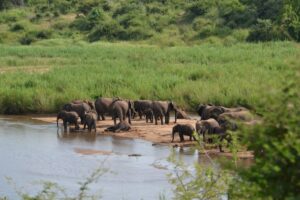
An elephant and a motor vehicle contemplating each other in a wilderness area. Large-scale roadbuilding in wilderness areas, a prerequisite for so-called photographic safaris, causes habitat damage and is generally more destructive than well-managed trophy hunting.
ELEPHANT OVERPOPULATION TROUBLES
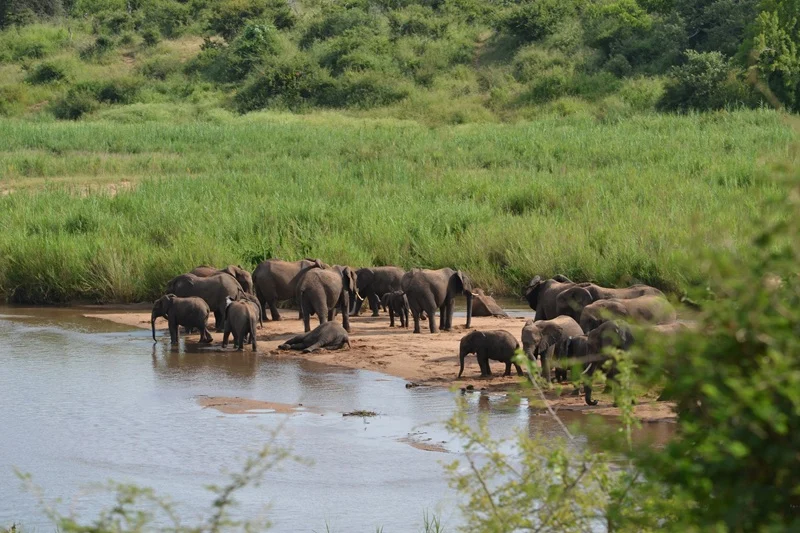
Earlier in the article I touched on the issue of elephant overpopulation. While elephants may be under pressure in certain areas of Africa, the undeniable truth is that they are vastly over-populated in many Southern African countries, particularly Botswana and Zimbabwe. Botswana has the biggest population of elephants in Africa with an estimated 127 000, most of them concentrated in the north-western part of the country. Zimbabwe has approximately 80 000 elephants of which the bulk is in the Hwange National Park in the northeast of the country.
Elephant overpopulation has a very negative impact on the environment. Not only do they consume vast amounts of fodder and push over trees, they also strain the available water resources. Elephants can on a daily basis, walk vast distances to and from waterholes in search of food. In Botswana’s Chobe National Park elephants have destroyed huge areas around available water resources that were home to other key species such as wildebeest, kudu, impala, eland and zebra. As a result, the numbers of these animal have plummeted due to the disappearance of their habitat and their inability to cover the same distances that elephants do in order to feed. The Chobe bushbuck (Tregelaphus scriptus ornatus), for a long time an iconic species of the Chobe National Park, is virtually extinct in many parts of its natural range, all directly attributable to elephant overpopulation.
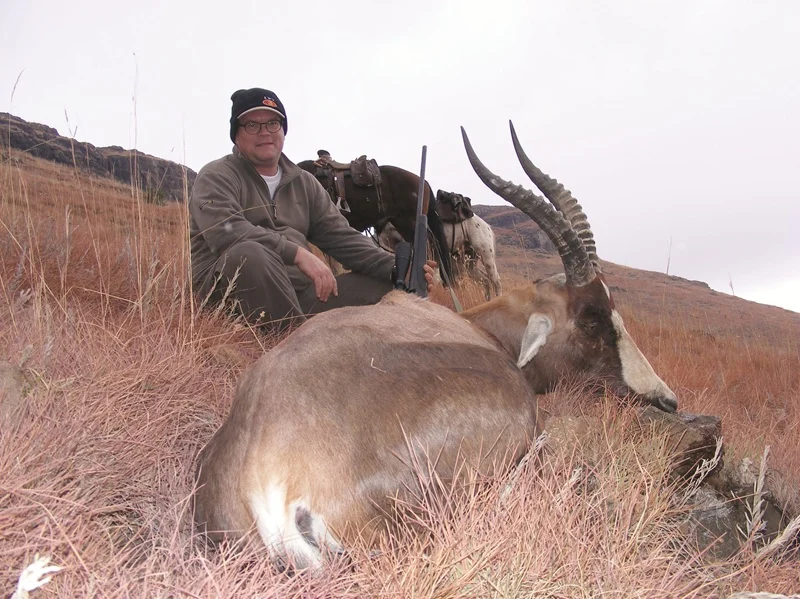
A buffalo bull sport-hunted in Zimbabwe. The sport-hunting of a limited and strictly controlled number of such animals has no detrimental effect on the overall buffalo population and generates considerable income for conservation and anti-poaching efforts.
THE IMPACT OF PHOTOGRAPHIC TOURISM
Another oft-repeated claim is that so-called photographic tourism does not harm animals and generates far more income than hunting does and is thus a viable replacement for trophy hunting. One UK-based animal rights group (Ban Trophy Hunting – www.bantrophyhunting.org) even makes the astonishing claim that photographic tourism generates up to forty times more income than trophy hunting.
While it is true that photographic safaris work well in some parts of Africa, it is also a given fact that they have no chance of success in other parts. The reason for this is terrain. Tourists prefer the nice open topography of places such as the Serengeti or Masai Mara for their photography. But the thick thornbush found in most parts of Zimbabwe and Botswana are completely unsuitable for any sort of tourism other than hunting.
Something else that animal extremists are quick to dismiss or keep quiet about, is the huge impact that photographic tourism actually has on the environment. A lodge with accommodation for, say, 20 guests along with a guide or three, plus the necessary staff and equipment required to serve these guests (for example waiters, chefs, game viewing vehicles, etc) requires vastly more resources to function compared to a lonely hunting camp out in the bush.
The ecological footprint left by 50 or 60 people, in the form of sewerage, drinking and bathing water, food, air pollution thanks to multiple vehicles, and other factors such as roads, is considerable. Roads, you may ask. Absolutely! The average non-paved road in a wilderness area is approximately 2.5m wide. Should a reserve clear about 300km of roads for game viewing activities (not an unreasonable number in many of the better-developed photographic safari destinations) 750ha of habitat are gone as well. Contrast this with a hunting camp that requires far fewer people to manage, uses less water, food, firewood and fuel, and mostly conducts its activities by walking in unspoilt habitat and it is easy to see that hunting has far less of an impact on the habitat when compared to photographic tourism.
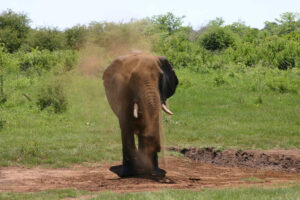
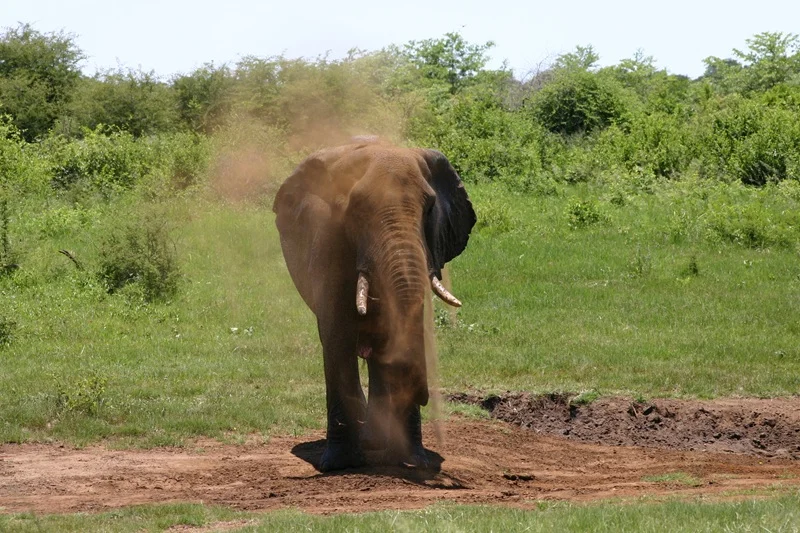
Elephant hunting is a controversial topic in certain circles. The facts, however, is that elephants are vastly overpopulated in many areas in Southern Africa. Carefully controlled elephant hunting, including the hunting of old trophy bulls such as this one, is therefore not only a huge income generator but a valuable conservation tool as well.
HUNTING PAYS THE WAY
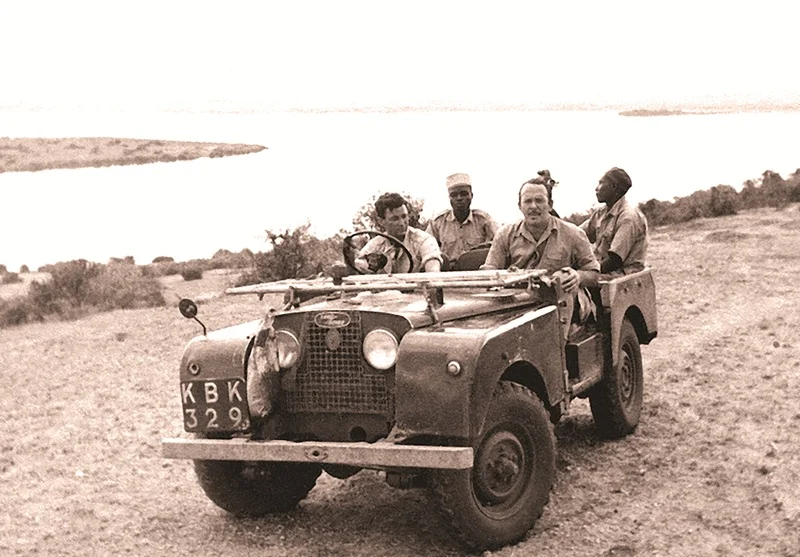
Notwithstanding all the emotion and hype surrounding trophy hunting, it is a fact that this type of hunting pays its way with very little impact on both animal numbers and the habitat. It is also true that one of the most effective anti-poaching efforts is a professional hunter with a paying client and a dedicated staff that regularly patrol an area, conduct anti-poaching efforts, provide water for and generally look after the animals in a concession. A good example of what happens when professional hunters and their clients are thrown out, is the banning of trophy hunting in Kenya in 1977; poaching there quickly became rampant and animal numbers plummeted.
Apart from the environmental benefits of trophy hunting, a hunter hunting in Africa can rest assured that his hard-earned rands and dollars are a direct investment in the future of African hunting.
*The help of Pieter Nel from the Southern African Wildlife College as well as Richard Sowry, Vice-President: Conservation of the SA Hunters and Game Conservation Organisation is gratefully acknowledged.